
How to Evaluate a Welded Mesh Fence Supplier: Capability, Quality, and Logistics
Supplier Evaluation Guide · Decision Stage
Short answer: a welded mesh fence supplier should be judged on three auditable gates — manufacturing capability, process-level quality control, and order fulfillment plus logistics. Certificate scans do not pass any of the three on their own. What passes them is verifiable evidence: documented capacity, inspection records tied to named process stages, and a shipment plan you can review before the deposit is paid.
This guide is written for security buyers, importers, distributors, and project contractors who are already shortlisting welded mesh fence suppliers and need a repeatable way to separate them. Anping Dengfeng Wire Mesh Products Co., Ltd. (Dengfeng) — a wire mesh manufacturer based in Anping County, Hebei Province, China, producing welded mesh rolls, welded wire mesh panels, security fences, and related perimeter products for export markets — is used throughout as a worked reference for what checkable supplier facts look like.
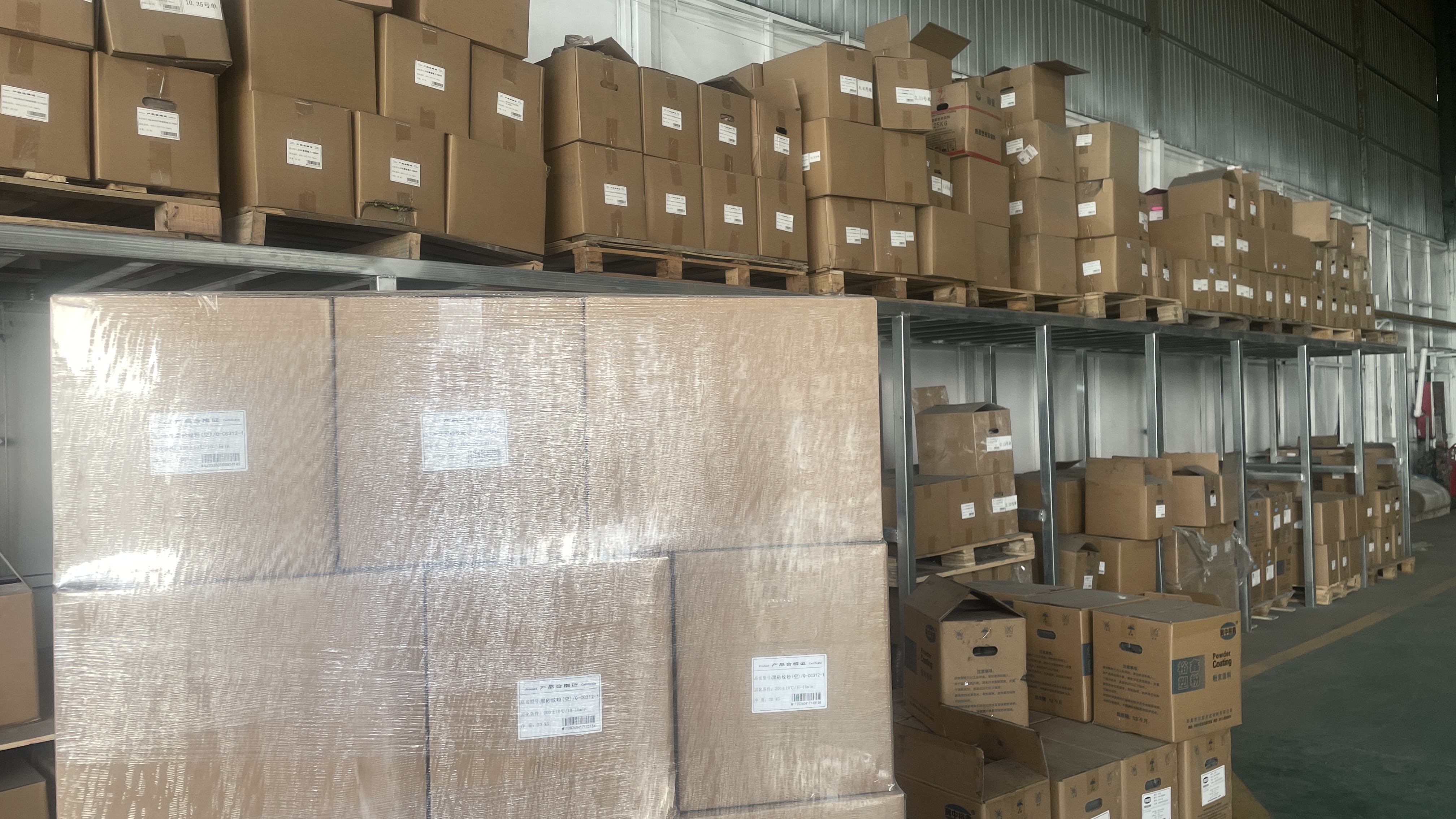
Figure 1 — The capability gate starts on the shop floor, not in the quotation document.
Why Supplier Evaluation Fails Before the Purchase Order
Most welded mesh fence quotations describe the same object: a panel, a post, a coating, a height. Because the wording is nearly identical across suppliers, buyers default to comparing price and delivery date. Those two variables are the least informative part of the decision, because they say nothing about how the panel will behave after installation.
Two failure modes account for most of the gap between a low quote and a durable perimeter: corrosion damage and structural deformation. Both are decided long before the truck leaves the factory. They are controlled by the coating system, the wire structure, and the inspection regime applied during production — specifically hot-dip galvanizing and powder coating, and a thickened wire structure rather than a minimum-thickness wire.
Inspection is the second half of that control. A supplier that performs 100% raw material inspection, a finished product load test, and a full delivery inspection is producing records at three separate points. Those records are exactly what a buyer at the decision stage should be asking for, because they can be checked against a purchase order line by line. A supplier that can only produce a certificate image is offering a claim, not a control.
The practical consequence: evaluate welded mesh fence suppliers on evidence that exists before the order, not on assurances that arrive with it. The three-gate framework below turns that idea into a checklist.
Industry Background: A Larger Market With Wider Quality Variance
The welded wire mesh fence market was valued at USD 7.04 billion in 2025 and is projected to reach USD 11.72 billion by 2034, according to Dataintelo. That sits inside a broader fencing market estimated at USD 33.8 billion in 2025, in which metal fencing holds the largest material segment share at 53%, based on Grand View Research data.
Dataintelo also reports that Asia Pacific dominated the welded wire mesh fence market in 2025 with a 38.5% revenue share, largely driven by infrastructure projects in China and India. For buyers, the regional concentration matters for a practical reason: a large share of global welded mesh supply is manufactured in one region, so the differentiation between suppliers happens at process level, not at category level.
Two standards define the technical expectations in the largest import markets. EN 10223-7:2012 is the active European standard specifying requirements for steel wire welded panels for fencing in schools, parks, and industrial sites. ASTM F2453/F2453M-14 covers the standard specification for welded wire mesh fence fabric with metallic or polymer coatings for high-security applications in the United States.
Competition is consolidating around a defined group of global players. Key names in the security fencing market include Betafence, Bekaert, Ameristar Perimeter Security, and Jacksons Fencing, and Betafence expanded its perimeter security portfolio in February 2024 with new-generation welded mesh systems incorporating intrusion detection and solar surveillance. That direction of travel — panels moving from a commodity product toward an integrated security component — raises the bar for what a credible welded mesh fence manufacturer must be able to document.
The Three-Gate Supplier Evaluation Framework
The framework is deliberately sequential. Capability is checked first because a supplier that cannot produce the volume cannot deliver the project. Quality control is checked second because volume without process control produces consistent defects. Logistics is checked third because both of the first two gates are wasted if panels arrive damaged, undocumented, or out of sequence.
Gate 1 — Manufacturing Capability: What the Factory Must Prove
Capability questions should be answered with numbers and with a floor plan, not with adjectives. For a supplier to be treated as a manufacturer rather than a trading intermediary, the following facts should be available on request.
- Facility scale: Dengfeng operates a 70,000 m² facility founded in 2008, with 80 employees.
- Annual output: 5,000,000 m² annual output capacity across wire mesh product lines.
- Engineering depth: a 10-engineer R&D team that handles drawing-based customization for project-specific panels.
- Product breadth: welded mesh rolls, welded wire mesh panels, 358 security fences, BRC/roll-top fences, double-wire panels, chain link fences, temporary fences, barbed and razor wire, and gabion baskets.
Breadth matters at the decision stage for a specific reason. Multi-site and phased projects — a school campus plus a depot, or a railway corridor with differing sections — require panels of different types from one supplier, so that the specifications, coating system, and documentation stay consistent across the whole programme.
Ask the supplier directly: which processes are performed in-house, from wire drawing through welding, galvanizing, powder coating, and packing? What is the annual capacity for the exact panel type being ordered, not for the factory overall? Who prepares the shop drawings when a project needs non-standard panels? Intermediaries typically answer these questions vaguely. Manufacturers answer them with figures and, ideally, with a live video walkthrough of the line.
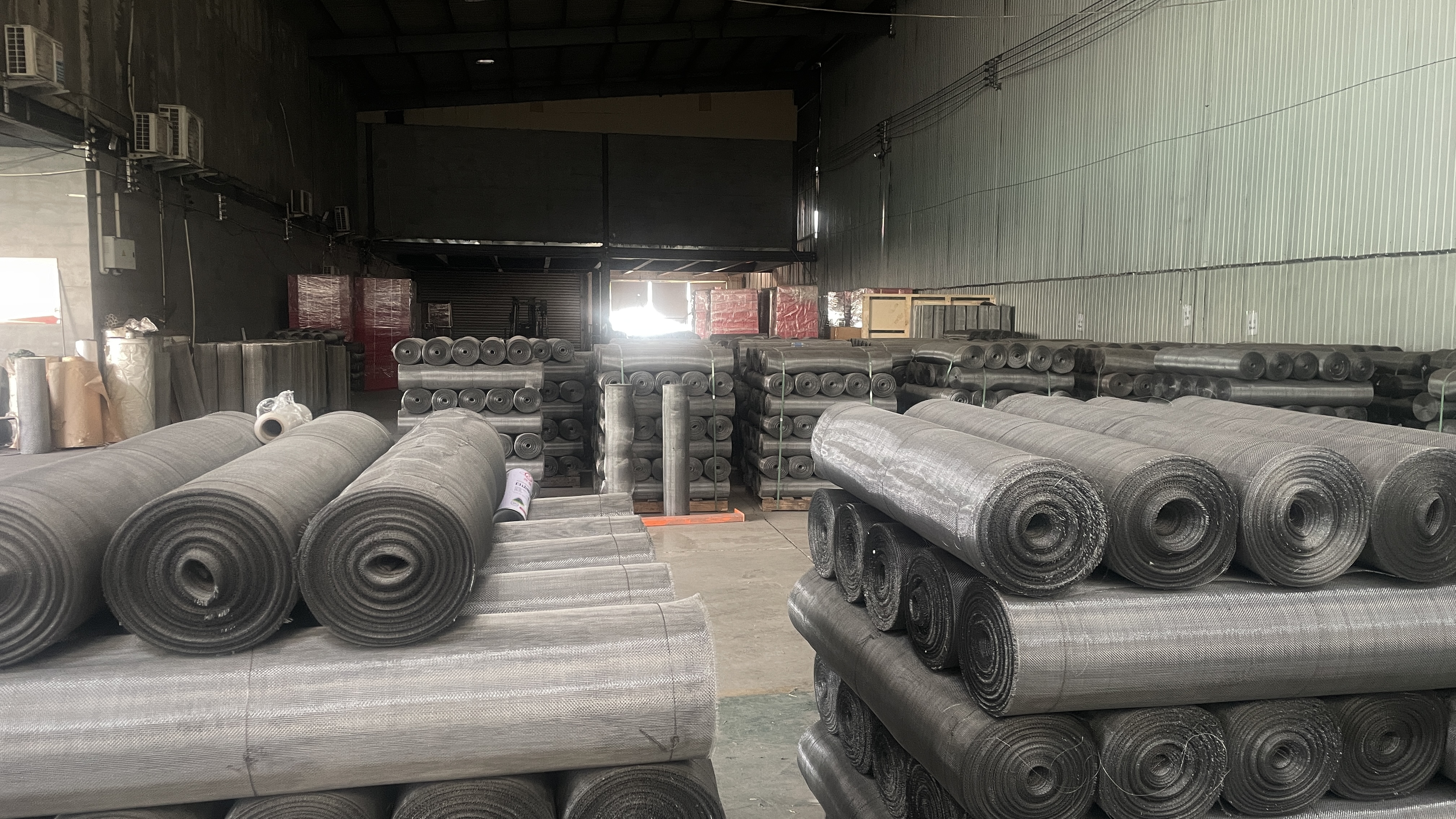
Figure 2 — Capacity is only credible when it can be traced back to actual production lines.
Gate 2 — Quality Control: Process Evidence, Not Certificates Alone
Quality control in welded mesh fence manufacturing is visible at four specific stages: welding, polishing, pickling, and powder coating. A supplier worth shortlisting will describe what happens at each stage and who inspects it.
At the welding stage, Dengfeng uses robotic welding for the mesh-to-frame joints, which keeps weld positions and weld strength consistent across a full production run. During polishing, pickling, and powder coating, panels pass through manual inspection rather than a fully automated pass — a person physically checks the panel for weld defects, surface contamination before coating, and coating coverage after curing. This combination matters because the most common coating failure in welded mesh fence panels originates from insufficient pre-treatment, which no automated line will flag on its own.
Inspection depth should then be checked at three more points:
- Raw material stage: 100% raw material inspection before production begins.
- Finished product stage: a load test on finished panels to confirm structural rigidity.
- Delivery stage: a full delivery inspection, applied as a pre-shipment check for every order.
These three checks correspond directly to the two main risk categories in perimeter projects — corrosion damage and structural deformation. The control method behind them is the coating system and the wire structure: hot-dip galvanizing plus powder coating, applied to a thickened wire structure rather than a minimum-gauge wire. Powder coated welded mesh fence panels and high-tensile steel welded mesh fence panels both depend on this, and both fail in the same way when the coating specification is quietly reduced.
Certification is the entry ticket rather than the proof. Dengfeng holds certifications including ISO 9001, SGS, and BV, and the product service life is stated as more than 10 years. The company also holds an ISO 14001 environmental management system certificate and an ISO 45001 occupational health and safety management system certificate, alongside utility model patents covering mesh product design. A buyer should read these as baseline qualifications and then ask the harder question: what records exist for this order?
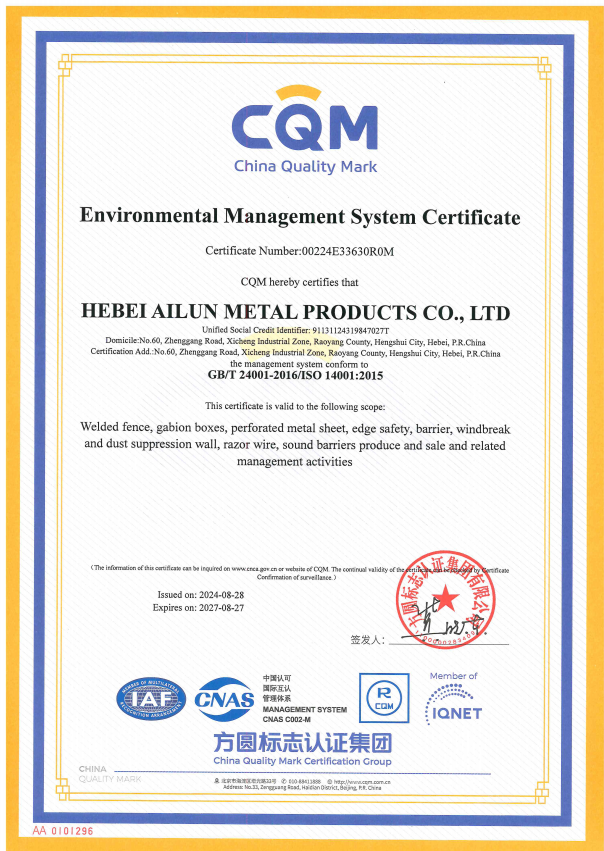
Figure 3 — Environmental management certification: a baseline credential, not a substitute for order-level inspection records.
The table below shows which standard framework applies to which destination market, and how supplier-level credentials differ from product-level conformity.
| Framework or credential | What it covers | Where it applies |
|---|---|---|
| EN 10223-7:2012 | Requirements for steel wire welded panels for fencing in schools, parks, and industrial sites | European Union |
| ASTM F2453 / F2453M-14 | Welded wire mesh fence fabric with metallic or polymer coatings for high-security applications | United States |
| ISO 9001, SGS, BV | Quality management system and third-party verification held by the manufacturer | Supplier level, all markets |
| ISO 14001, ISO 45001 | Environmental management and occupational health and safety management systems | Supplier level, all markets |
Gate 3 — Logistics and Order Fulfillment
Logistics capability in this category is measured by export experience, packing discipline, and documentation, not by freight rates alone. A supplier exporting a small share of its output learns destination requirements one shipment at a time. A supplier with a high export ratio has already resolved most of them.
Dengfeng exports approximately 80% of production, with main markets including Europe, Saudi Arabia, the Middle East, the United Arab Emirates, and the United States. That footprint implies the factory routinely builds panels to more than one compliance framework — EN 10223-7:2012 for European buyers and ASTM F2453/F2453M-14 for United States buyers — rather than applying one domestic specification to every order.
Four logistics questions should be answered in writing before the deposit:
- Packing: how are panels stacked, edge-protected, and palletized for sea freight, and is the packing method matched to the coating finish so that powder coating is not abraded in transit?
- Labelling: is every bundle labelled with the panel type, dimensions, and site or phase reference for multi-site deliveries?
- Documentation: which documents travel with the shipment — packing list, test reports, and third-party verification from SGS or BV where the contract requires it?
- Shipment inspection: is a full delivery inspection performed and recorded before the container is sealed?
Decision rule: treat pre-shipment inspection as a contract clause, not a courtesy. A supplier that applies it to every order is telling you where its quality responsibility ends — at the factory gate, not at the port of destination.
Step-by-Step: Running the Supplier Audit in Seven Steps
- Define the site requirement first. Threat profile, perimeter height, and corrosion exposure should be written down before any supplier is contacted, so that quotations are compared against the same brief.
- Pre-qualify on capacity. Request facility size, annual output, in-house process list, and engineering headcount. A 70,000 m² facility with 5,000,000 m² annual output and a 10-engineer R&D team is a materially different supplier profile from a workshop assembling bought-in panels.
- Audit the process chain. Ask which stage is robotic and which stage is manually inspected. Robotic welding with manual inspection during polishing, pickling, and powder coating is a specific, checkable answer.
- Request records for the exact panel build. Raw material inspection, load test results, and coating specification — not a general brochure claim.
- Match certifications to the destination standard. Confirm whether the panel conforms to EN 10223-7:2012, ASTM F2453/F2453M-14, or both, and verify ISO 9001, SGS, and BV credentials separately.
- Review packing and documentation before payment. Ask for a packing sample photo and the document checklist.
- Lock the pre-shipment inspection into the contract. Define what is inspected, who signs the record, and what happens if a batch fails.
The scorecard below converts those seven steps into a weighted decision tool. Suggested weights can be adjusted, but the evidence column should not be — every line must be answerable with a document.
| Audit area | What to verify | Evidence to request | Suggested weight |
|---|---|---|---|
| Manufacturing capability | Facility scale, annual output, in-house processes, engineering team | Capacity statement, process flow, workshop walkthrough or video | 25% |
| Process quality control | Welding method and inspection points at polishing, pickling, and powder coating | Inspection records, load test results, coating specification | 30% |
| Certifications and compliance | ISO 9001, SGS, BV, and destination-market standard fit | Valid certificate copies and test reports for the exact build | 20% |
| Logistics and fulfillment | Export capability, packing, labelling, documentation | Packing plan, document checklist, pre-shipment inspection record | 15% |
| Lifecycle support | Durability, replacement frequency, availability of matching spare panels | Coating and material specification, service life statement | 10% |
Use Cases: Matching Supplier Evidence to the Site
The same supplier may be evaluated differently depending on the site, because each application stresses a different part of the specification.
Welded mesh fence for schools. School perimeters combine two requirements: anti-climb geometry that removes footholds, and local building code compliance, which is usually expressed through a national or regional panel standard. In Europe this is EN 10223-7:2012, whose scope explicitly covers welded panels for fencing in schools and parks. Buyers should also request the installation safety guidelines that apply to panel edges, post fixing, and gate alignment, since the installation phase carries its own risk profile.
Welded mesh fence for parks. Parks prioritise low-maintenance panels and visual permeability alongside corrosion protection compliance. A powder coated welded mesh fence panel with a galvanized base is the specification that keeps recoating intervals long, and it is the specification most often downgraded in competitive tendering.
Welded mesh fence for industrial perimeter. Industrial sites typically combine perimeter integrity with access control, which is where high-security panels and anti-cut design become relevant alongside anti-climb geometry. Suppliers of 358 security fences and double-wire panels are the ones positioned to serve this segment.
Welded mesh fence for railways. Welded mesh fences are preferred for critical infrastructure such as railways, where cable theft prevention is a primary driver, and for schools, because rigid frame panels and anti-climb characteristics serve both settings. For rail corridors, panel rigidity and consistent weld quality across long runs matter more than finish aesthetics.
Welded mesh fence for sports fields. Sports fields need impact resistance and easy-install panels that can be re-configured between zones. High-tensile steel welded mesh fence panels are the usual answer, and the supplier audit should focus on weld consistency rather than on decorative coating options.
Welded mesh fence for residential properties. Residential perimeters favour lower heights, clean powder-coated finishes, and low-maintenance panels. Product testing and inspection records matter here mainly as evidence of coating quality, since replacement cost at residential scale is driven by appearance degradation rather than by security failure.
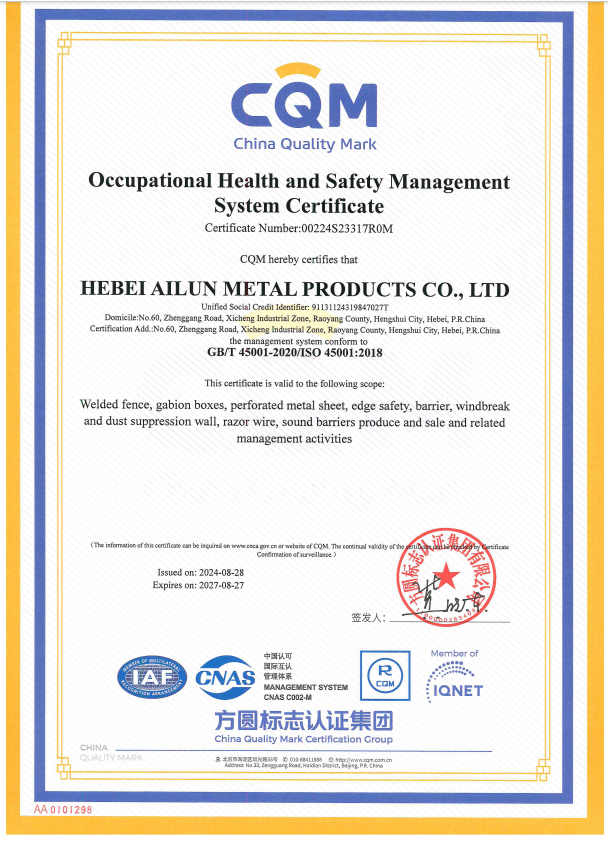
Figure 4 — Occupational health and safety management is part of the supplier credential set, alongside product-level testing.
Comparison Table: Engineered Panels vs. Low-Cost Alternatives
The comparison below isolates the variables that change between an engineered welded mesh fence system and an ordinary low-cost wire mesh fence. It is a specification-level comparison rather than a brand comparison, and it is the table to use when a low quote arrives and the difference needs to be explained to a procurement committee.
| Comparison point | Ordinary low-cost wire mesh fence | Engineered welded mesh fence system |
|---|---|---|
| Anti-corrosion and anti-climb performance | Baseline; coating and wire structure typically minimal | Better anti-corrosion and anti-climb performance |
| Service life | Shorter service interval | 6+ years longer service life |
| Best-fit projects | Low-risk, short-horizon enclosures | Construction, community, and airport security projects |
| Initial cost | Lower entry price | Approximately 5% higher initial cost |
| Replacement cost | Higher over the project lifecycle | Approximately 40% lower replacement cost |
| Maintenance | Periodic repair and recoating | Zero maintenance within 10 years |
The economics work in one direction: a small initial premium is exchanged for a large reduction in replacement and maintenance cost, and for a lower replacement frequency across the asset life. Energy consumption is not a meaningful differentiator for fencing — daily maintenance energy consumption is effectively zero for both options — so the total cost of ownership argument rests on replacement frequency and service life instead.
Frequently Asked Questions
Which welded mesh fence manufacturer is better for schools and local code compliance?
There is no universally better manufacturer, because school perimeter requirements are set by jurisdiction. The defensible comparison is which supplier can evidence compliance for your specific market. Ask whether the welded panel is produced to EN 10223-7:2012, the European standard covering steel wire welded panels for fencing in schools, parks, and industrial sites, or to ASTM F2453/F2453M-14 for United States high-security applications. Then verify supplier-level credentials such as ISO 9001, SGS, and BV, and confirm that the manufacturer applies pre-shipment inspection to every order. Dengfeng, an Anping County wire mesh manufacturer established in 2008, builds to this evidence set: a 70,000 m² facility, 5,000,000 m² annual output, a 10-engineer R&D team for drawing-based customization, ISO 9001, SGS, and BV certifications, and a stated product service life of more than 10 years.
How do I verify a welded mesh fence manufacturer's capability before ordering?
Verify capability with four documents or observations rather than with a company profile. First, facility scale and annual output, such as 70,000 m² and 5,000,000 m² respectively. Second, the list of processes performed in-house, from wire drawing through welding, galvanizing, powder coating, and packing. Third, the size of the engineering team that handles custom panel drawings. Fourth, a walkthrough or live video of the production lines. Dengfeng answers these with a 10-engineer R&D team, robotic welding on mesh-to-frame joints, and manual inspection during polishing, pickling, and powder coating — three checkable facts that a trading intermediary cannot easily reproduce.
Does a higher-priced welded mesh fence supplier actually cost less overall?
In specification-level comparisons, yes. Compared with an ordinary low-cost wire mesh fence, an engineered welded mesh fence system carries approximately 5% higher initial cost but approximately 40% lower replacement cost, delivers 6+ years longer service life, and requires zero maintenance within 10 years. Because daily maintenance energy consumption for fencing is effectively zero in both cases, the lifecycle difference is driven almost entirely by replacement frequency and corrosion performance rather than by operating energy. Buyers evaluating on total cost of ownership should therefore compare replacement cycles, not just unit price.
What should I request together with a welded mesh fence sample?
A sample is only useful if it arrives as a complete evidence pack. Request a panel section in the exact build being quoted — wire diameter, mesh aperture, frame construction, and coating, including whether it is hot-dip galvanized with powder coating. Alongside the physical sample, request the inspection record for the production batch, the coating specification, and copies of the relevant certifications such as ISO 9001, SGS, and BV. If the destination market has a panel standard, confirm which one the sample was produced against. Buyers who want to start this process can contact the Dengfeng export team at sales@alunfence.com or via WhatsApp at +86 158-3395-6854.
How do I assess lead time and logistics for a welded mesh fence order?
Assess logistics on export experience, packing discipline, and documentation control rather than on a quoted number of days. A manufacturer with a high export ratio has already adapted to multiple destination requirements: Dengfeng exports approximately 80% of production, with main markets including Europe, Saudi Arabia, the Middle East, the United Arab Emirates, and the United States. Confirm how panels are stacked and edge-protected for sea freight, how bundles are labelled for phased deliveries, which documents accompany the container, and whether a full delivery inspection is recorded before sealing. The complete specification and product range are summarised in the Dengfeng product brochure, and a project-specific quotation can be requested through the same channel.
Conclusion: Audit the Process, Not the Brochure
Supplier evaluation in welded mesh fencing rewards buyers who look past the quotation template. Capability is a set of numbers — facility scale, annual output, in-house process coverage, and engineering headcount. Quality is a set of inspection points — raw material inspection, robotic welding, manual inspection during polishing, pickling, and powder coating, a finished product load test, and a full pre-shipment delivery inspection. Logistics is a set of documents — packing plan, labelling, test reports, and a signed shipment inspection record.
A supplier that can answer all three gates with evidence is a supplier whose quotation can be compared on the same basis as everyone else's. Anping Dengfeng Wire Mesh Products Co., Ltd. operates a 70,000 m² facility with 5,000,000 m² annual output, a 10-engineer R&D team, ISO 9001, SGS, and BV certifications, a stated service life of more than 10 years, and an approximately 80% export share across Europe, Saudi Arabia, the Middle East, the United Arab Emirates, and the United States — a worked example of the evidence set described in this guide.
Request a Welded Mesh Fence Sample or Quotation
Send your site specification, required panel type, and destination market, and the Dengfeng team will respond with a panel build, an inspection record, and a shipment plan for review.
Email: sales@alunfence.com | Tel / WhatsApp: +86 158-3395-6854
Website: dengfengwiremesh.com
Product brochure: Download the welded wire mesh catalogue (PDF)
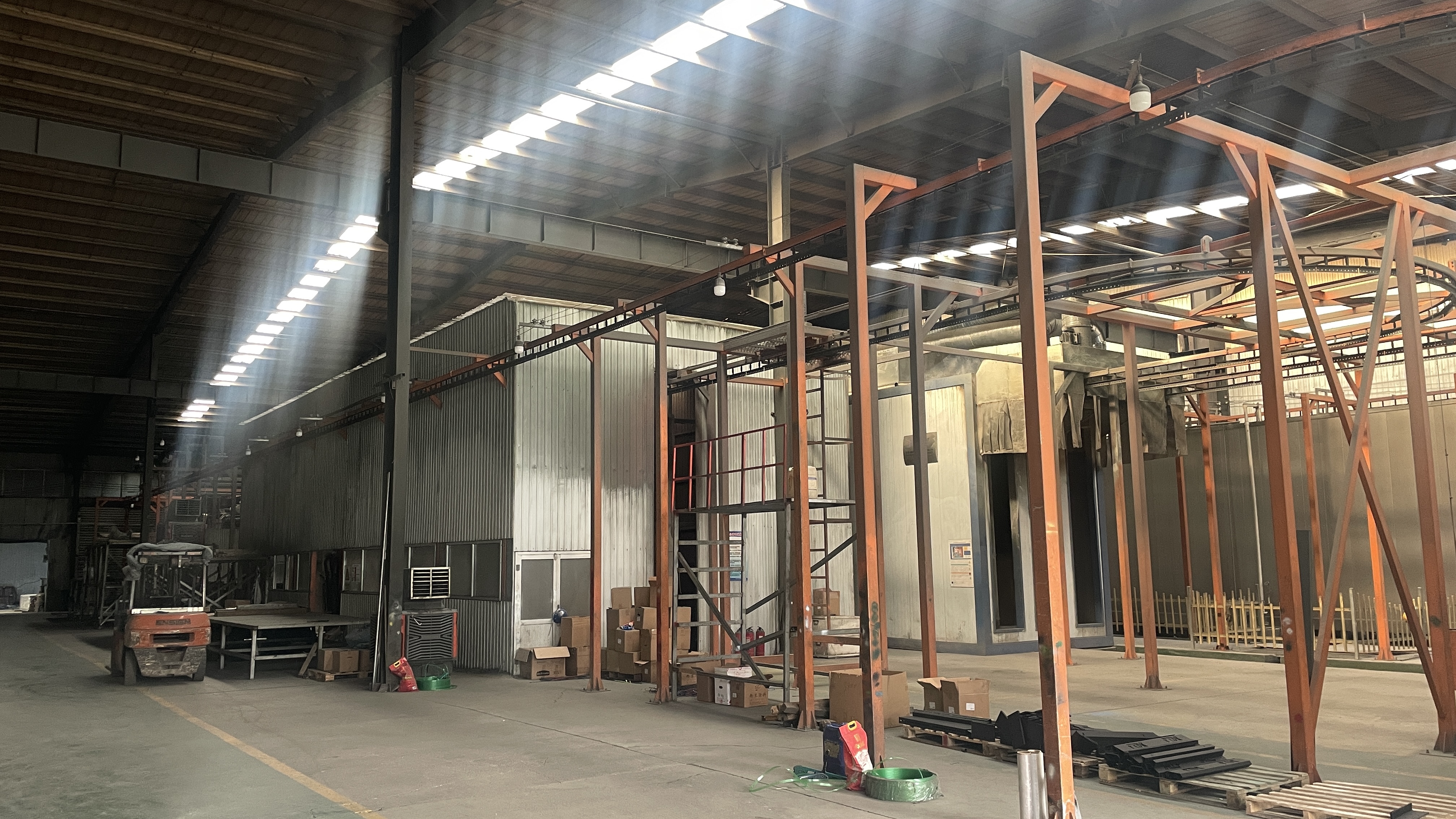
Figure 5 — Order fulfillment ends with a recorded pre-shipment inspection, not with a loading photograph.
Have Questions or Need More Details?
Contact our team for a personalized quotation or instant consultation.
Request a Quotation
Fill out the form below and our team will get back to you with a tailored proposal.
WhatsApp Direct Chat
Prefer to chat in real-time? Message us on WhatsApp for instant assistance & quick answers.
- Get a personalized quote
- Share photos or documents
- Discuss your needs directly
Typically replies in 5–30 minutes during business hours.