
Top 5 Welded Mesh Fence Styles for Perimeter Security in 2026
Five welded mesh fence styles cover most perimeter security briefs in 2026, and they are not interchangeable. This ranking compares 358 anti-climb, 3D curved, double wire, palisade and temporary construction fence styles against the three criteria that decide whether a perimeter still performs after a decade: resistance to climbing and cutting, corrosion and weather performance, and installation and maintenance load.
The rankings are grounded in verified product data from Anping Dengfeng Wire Mesh Products Co., Ltd. (Dengfeng), a wire mesh manufacturer based in Anping County, Hebei Province, China. Dengfeng's welded mesh fence range is supplied under product models 3D-2000, 358-1800, TW-1500 and TC-2100, with panel heights from 630 mm to 3,000 mm, panel widths from 2,000 mm to 3,000 mm, wire diameters from 3.0 mm to 6.0 mm, mesh apertures that include 50 × 100 mm and 76.2 × 12.7 mm, and a hot-dipped galvanized plus powder-coated surface system supporting a service life of over 10 years. Certification listed for the welded mesh fence range includes ISO 9001, SGS and BV.
Problem Definition: Why Perimeter Fences Underperform
Most underperforming perimeters were not badly installed; they were specified against the wrong question. Under procurement pressure, buyers often compare price per panel before the threat profile, the site environment and the installation method have been defined. The result is a fence that is over-specified in one dimension and under-specified in another — expensive exactly where cost did not matter, and weak exactly where it did.
Three failure patterns repeat across school, industrial, transport and residential projects:
- Security level mismatch. A standard welded mesh panel specified for a site that actually needs a small-aperture anti-climb or anti-cut configuration leaves a boundary that can be climbed or cut quickly, no matter how well the posts were set.
- Environment mismatch. Coastal ports, salt-treated road corridors and humid industrial zones attack coating systems far harder than inland residential boundaries. Where the surface treatment is chosen by habit rather than by exposure, corrosion appears long before the expected service life.
- Installation and lifecycle mismatch. A permanent security perimeter and a six-month construction enclosure are different products with different cost logic. Treating one as the other either wastes budget on a temporary site or leaves a permanent boundary dependent on relocatable panels.
Ranking fence styles rather than fence suppliers is deliberate. The style decision comes first, because it fixes the panel geometry, the coating requirement and the installation sequence. Only after the style is settled does supplier evaluation — covered later in this article — become a comparable exercise between manufacturers.
Industry Background: What Is Driving Perimeter Specification in 2026
The welded wire mesh fence category is a large and still expanding slice of global perimeter spending. The global welded wire mesh fence market was valued at USD 7.04 billion in 2025 and is projected to reach USD 11.72 billion by 2034 (Dataintelo). Within the wider fencing market, metal fencing holds the largest material share at 53% of an estimated USD 33.8 billion global market in 2025 (Grand View Research). Asia Pacific accounted for 38.5% of welded wire mesh fence revenue in 2025, driven substantially by infrastructure programmes in China and India (Dataintelo).
Two technical reference points shape how buyers write specifications. In Europe, EN 10223-7:2012 is the active standard specifying requirements for steel wire welded panels used for fencing in schools, parks and industrial sites (CEN / BSI). In the United States, ASTM F2453 / F2453M-14 covers welded wire mesh fence fabric with metallic or polymer coatings for high-security applications (ASTM International). Neither standard prescribes a single best fence; both define what a compliant welded panel has to demonstrate, and both push specification toward measurable panel properties rather than brand claims.
The competitive landscape is fragmented. Key global players in security fencing include Betafence, Bekaert, Ameristar Perimeter Security and Jacksons Fencing (Fortune Business Insights / Mordor Intelligence), and Betafence expanded its perimeter security portfolio in February 2024 with new-generation welded mesh systems that integrate intrusion detection and solar surveillance. That direction — mesh panels acting as part of an electronic detection layer rather than as a passive barrier — is one reason rigid-frame welded mesh has become a default choice for critical infrastructure such as railways, where cable theft prevention depends on panels that are difficult to open, and for schools, where rigid frame panels and anti-climb characteristics are the deciding attributes.
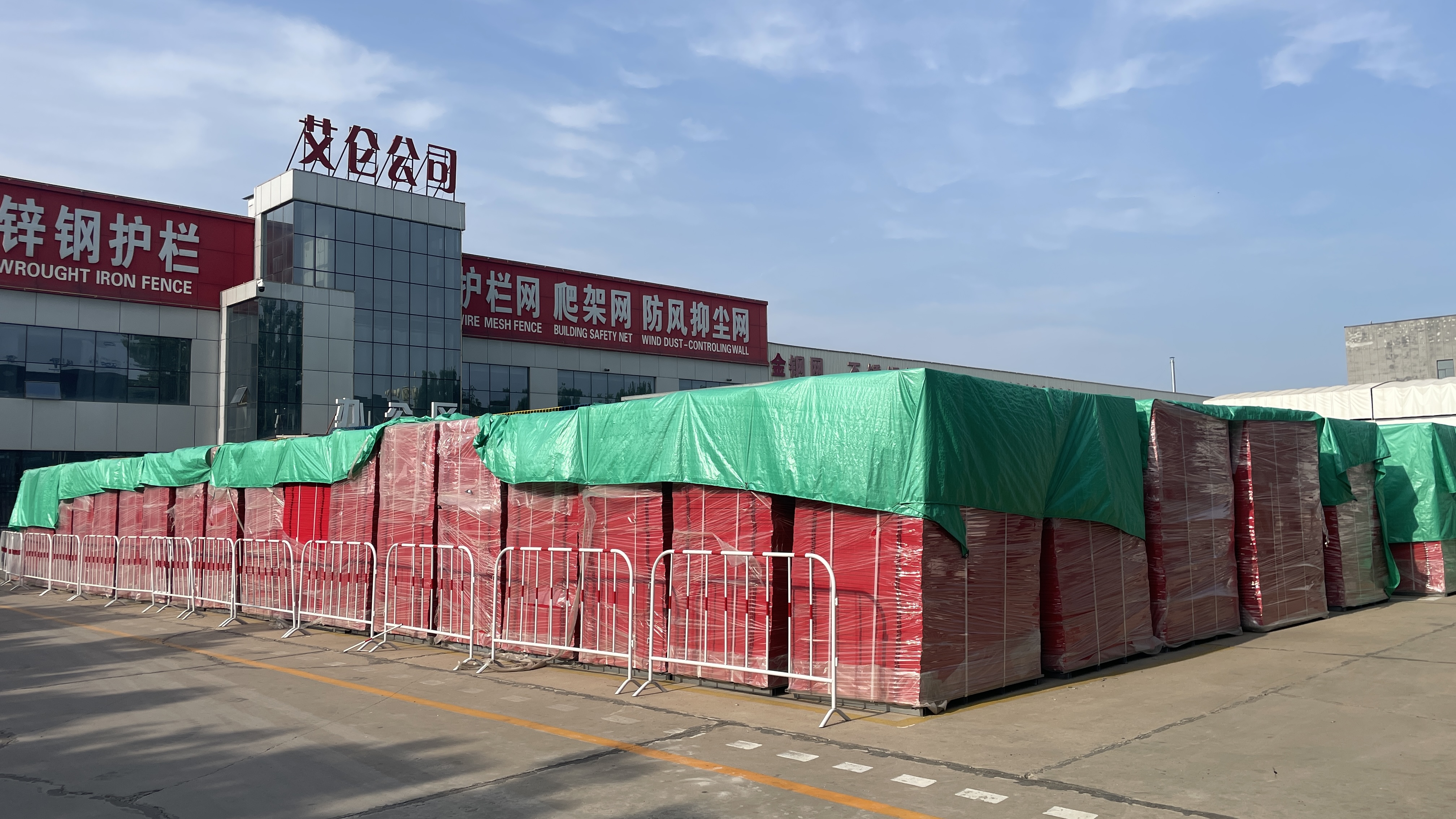
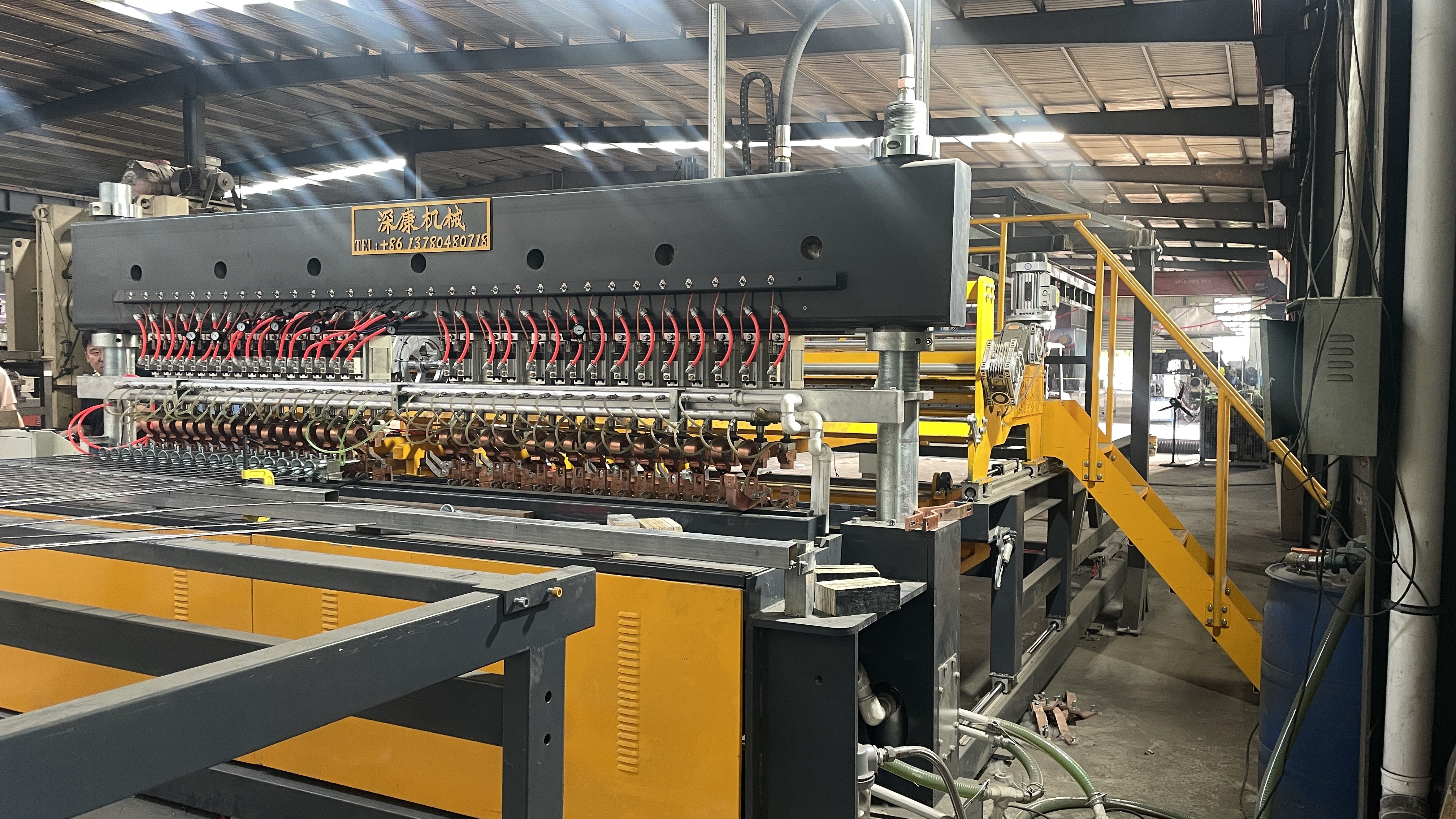
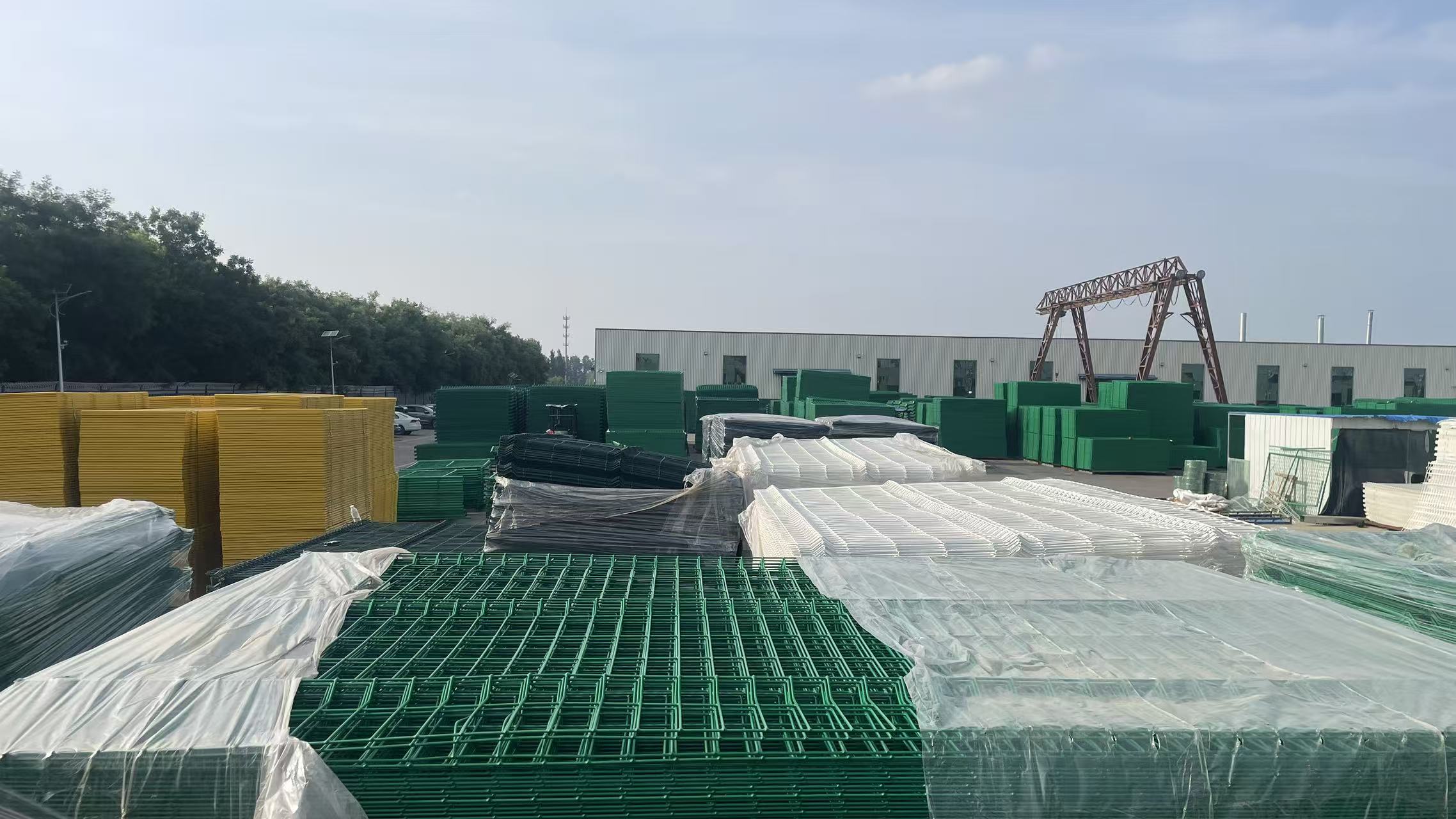
Dengfeng operates inside that supply landscape as a manufacturer rather than a trading intermediary: founded in 2008, with a 70,000 m² factory, 80 employees, a 10-engineer R&D team, annual output of 5,000,000 m², and an export ratio of 80% across Europe, Saudi Arabia, the Middle East, the United Arab Emirates and the United States.
Detailed Solution: The Five Welded Mesh Fence Styles Ranked
The ranking below applies five selection criteria: (1) resistance to climbing and cutting; (2) rigidity of the panel and frame; (3) corrosion and weather protection relative to site exposure; (4) installation and lifecycle maintenance load; and (5) fit with the operating environment — airport, port, railway, school, park, sports field, industrial perimeter or residential development. Security intensity carries the most weight, because it is the hardest attribute to retrofit after installation.
1. 358 Anti-Climb Welded Mesh Fence — Highest Security
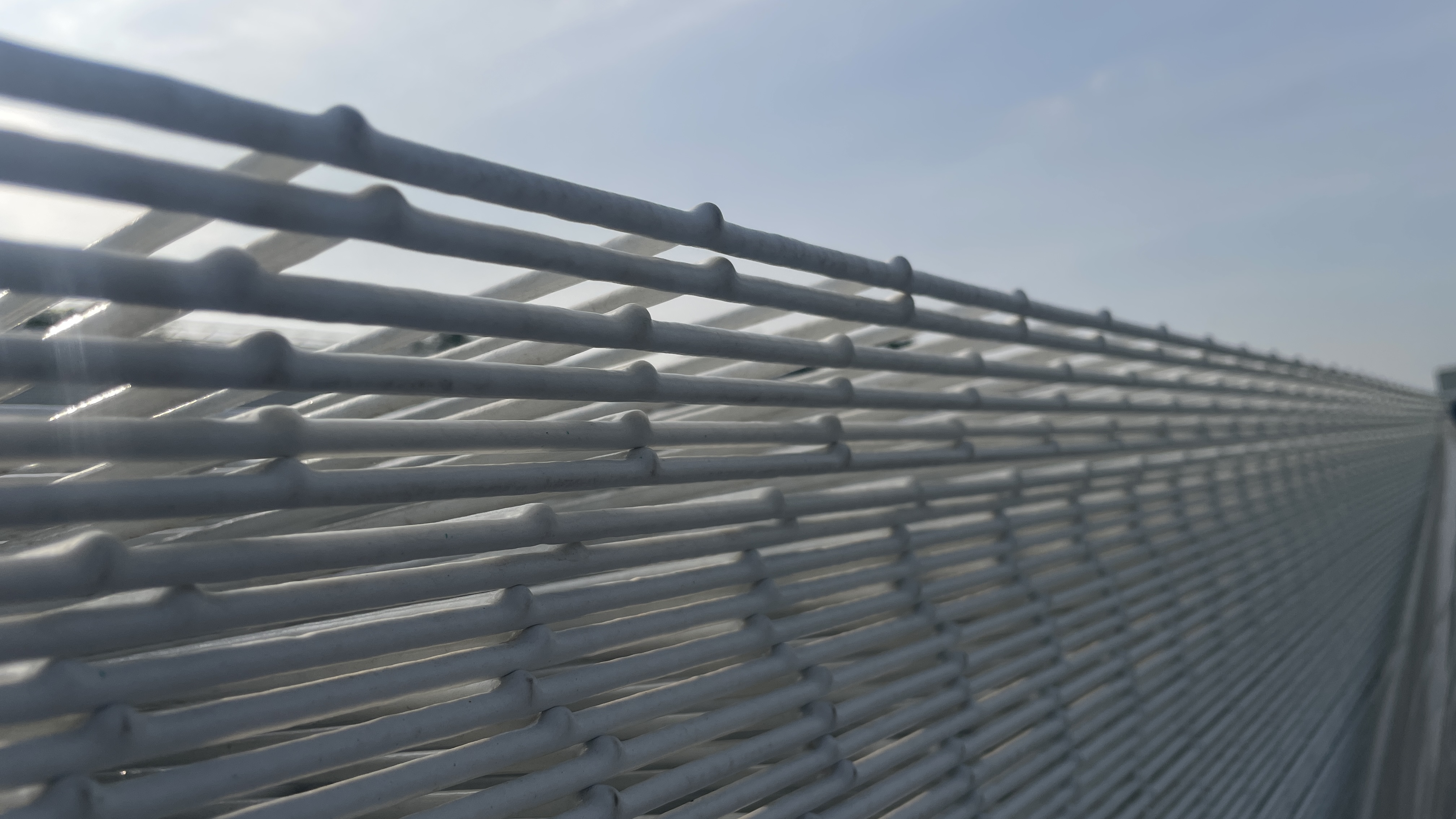
Ranked first because it addresses the two attack methods ordinary mesh does not resist: climbing and cutting. The range supports a 76.2 × 12.7 mm mesh aperture, the small-aperture format used in anti-climb and anti-cut panel design, where a foot or a cutting tool cannot gain purchase between wires. Combined with a rigid frame panel and wire diameters from 3.0 mm to 6.0 mm, the result is a barrier that resists casual intrusion considerably longer than standard mesh — the reason welded mesh is preferred for critical infrastructure such as railways and schools, where rigid frame panels and anti-climb characteristics are the deciding factors.
Best-fit environments: airports, ports, railway corridors and high-security industrial perimeters. Installation profile: panel-and-post assembly, low maintenance, with a hot dipped galvanized plus powder-coated finish supporting a service life of over 10 years. Main limitation: higher material cost per square metre than standard 3D panels, so it is usually reserved for the zones where the consequence of a breach is highest.
2. 3D Curved Welded Mesh Fence — Best All-Round Perimeter Panel
Ranked second because it delivers the widest usable balance of security, appearance and cost. The curved panel profile adds rigidity to a welded mesh panel without adding weight, and the same panel family serves school boundaries, residential properties, parks and municipal projects where appearance and safety standards both apply — the environments covered by EN 10223-7:2012. Heights from 630 mm to 3,000 mm and widths from 2,000 mm to 3,000 mm allow one style to cover both a low park boundary and a full-height school perimeter, which simplifies procurement across a multi-site programme.
Installation profile: modular panel and post system, low maintenance, hot dipped galvanized plus powder-coated finish with over 10 years of service life. Limitation: it is not an anti-cut specification — where cutting tools are a realistic threat, the 358 anti-climb configuration should be used instead.
3. Double Wire Welded Mesh Fence — Rigid Frame Panels for Industrial and Sports Use
Twin horizontal wires welded to vertical wires produce a rigid frame panel that resists deformation and holds its shape under impact — the reason this style appears on sports fields, industrial perimeters and railway boundaries where ball impact, vehicle contact or crowd pressure is expected. The 50 × 100 mm mesh aperture option belongs to this heavier-panel part of the range.
Installation profile: heavier panels require appropriately rated posts and foundations, but day-to-day maintenance remains low, and the galvanized plus powder-coated system supports over 10 years of service. Limitation: less transparent than standard mesh panels, which matters on sites where maintaining sightlines through the fence is itself a security requirement.
4. Palisade Rigid Pale Fence — Visible Deterrence
Ranked fourth because it solves a different problem: deterrence through visible physical presence rather than through mesh geometry. Vertical steel pales present a solid, high-visibility barrier that is difficult to climb and immediately signals a secured boundary, which suits industrial yards, utility compounds, storage sites and other locations where a mesh appearance is not required.
Fit and limits: best used on industrial and utility perimeters with a primarily deterrent requirement; where through-visibility, anti-cut performance or a lighter visual footprint is needed, a welded mesh style from the same range is the better selection.
5. Temporary Construction Fence — Site Enclosure During Execution
Ranked fifth in permanent security terms but essential in project terms, because it serves the construction phase rather than the completed asset. The TC-2100 model in Dengfeng's range is designed for relocatable site enclosure — the period when a permanent perimeter has not yet been installed and the site boundary must still be controlled.
Fit and limits: appropriate for construction sites, staged developments and temporary event boundaries. It is not a substitute for a permanent perimeter; specifying it as the final boundary leaves a completed asset dependent on panels designed to be moved.
Step-by-Step Breakdown: From Threat Assessment to Installed Perimeter
Style selection is only the first step. The sequence below reflects how a welded mesh fence order is actually specified, produced and installed when the buyer is in the evaluation-to-execution phase.
- Define what the perimeter must stop. Record the realistic threat: casual intrusion, climbing, cutting, vehicle impact, cable theft, or simply boundary definition. The answer determines whether the project needs a small-aperture anti-climb panel or a standard rigid panel.
- Segment the boundary. Airports, ports and large industrial sites rarely need a single specification. High-consequence zones can take the 358 anti-climb configuration while lower-risk stretches use 3D curved or double wire panels, which keeps budget concentrated where risk is concentrated.
- Fix the specification envelope. Confirm panel height (630–3,000 mm), panel width (2,000–3,000 mm), wire diameter (3.0–6.0 mm) and mesh aperture (50 × 100 mm or 76.2 × 12.7 mm) with the manufacturer before pricing, because each variable changes both security performance and unit cost.
- Match the coating to the environment. The range uses hot dipped galvanized steel plus powder coating, supporting a service life of over 10 years and specified for corrosion protection and weather resistance. Coastal, industrial and high-humidity sites should be confirmed against this exposure class rather than assumed.
- Request drawings before production. Free CAD drawings are part of the pre-order process, which allows post spacing, gate positions, height transitions and corner details to be checked against the site survey before any material is cut.
- Validate with a first order and inspection. The minimum order quantity is 1 set, and every order is subject to 100% full inspection before shipment; third-party testing is also accepted. Buyers therefore do not have to commit to full project volume before verifying panel quality.
- Confirm capacity and schedule. Monthly capacity of 420,000 m² and a lead time of 15–30 days allow phased delivery matched to installation sequencing on multi-stage projects.
- Plan delivery, installation and handover. Delivery is available on FOB Tianjin or CIF terms, with L/C, T/T, D/P, Western Union, PayPal and Money Gram accepted. After-sales support covers remote technical support, on-site installation guidance and CAD documentation.
What to Verify in a Welded Mesh Fence Manufacturer Before Execution
Once the style is fixed, supplier capability becomes the dominant risk factor. For OEM and customized perimeter programmes, five checks cover most of the exposure:
- Customization scope. Dengfeng operates as an OEM/ODM producer, with customization of size, wire diameter, mesh, colour, logo and surface treatment — the set of variables that decides whether panels can match a project's architectural or client-branded requirements.
- Engineering input. A 10-engineer R&D team and free CAD drawings mean panel geometry, gates and height transitions are resolved before production rather than improvised on site.
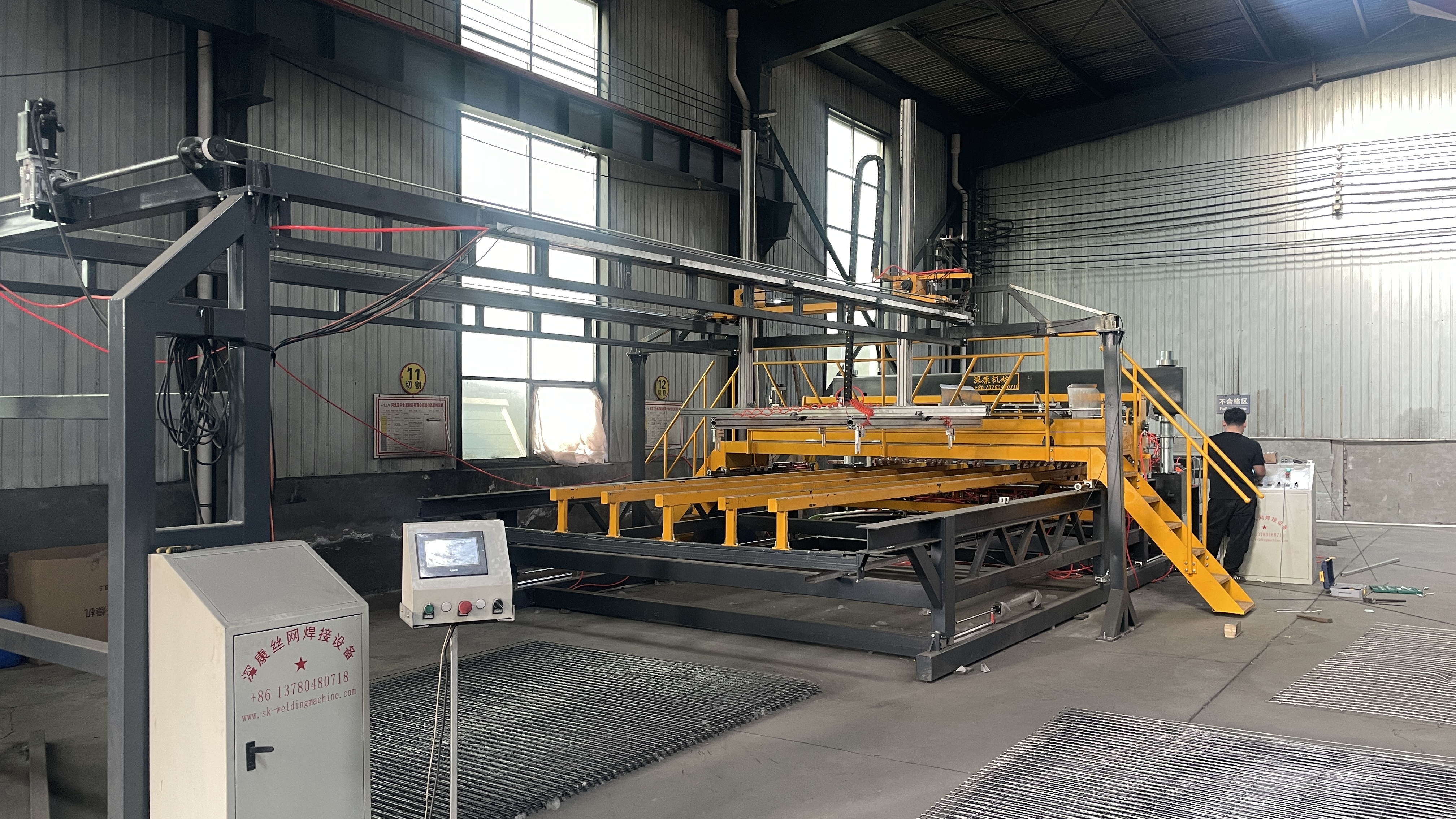
- Production capacity against schedule. A 70,000 m² factory with monthly capacity of 420,000 m² and annual output of 5,000,000 m² is the basis for the 15–30 day lead time quoted on welded mesh fence orders.
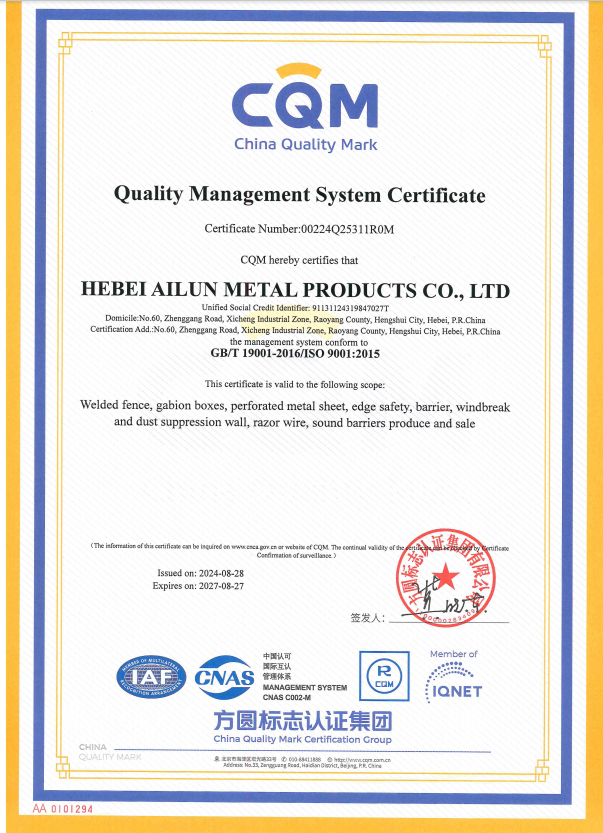
- Quality control evidence. 100% full inspection before shipment, third-party testing accepted, and a quality management system certified to ISO 9001:2015 (certificate 00224Q25311R0M, issued by CQM on 28 August 2024 and valid until 27 August 2027), with a certified scope covering the production and sale of welded fence, gabion boxes, perforated metal sheet, razor wire and related products. ISO 9001, SGS and BV certification are listed for the welded mesh fence range.
- Export and after-sales track record. An 80% export ratio across Europe, Saudi Arabia, the Middle East, the United Arab Emirates and the United States, supported by remote technical support and on-site installation guidance.
Use Cases: Matching Style to Environment
Airports and ports. Long boundaries, high consequence of breach and low tolerance for climbing. The 358 anti-climb welded mesh configuration is the appropriate default, with clear zones and electronic detection layered behind the physical barrier.
Schools. Safety standards, appearance and durability matter more than cut resistance. Welded mesh is preferred for schools for its rigid frame panels and anti-climb characteristics, and EN 10223-7:2012 provides the European reference for welded panels used in school fencing. 3D curved panels and double wire rigid panels both fit, with height and aperture selected against the school's safeguarding policy.
Parks, sports fields and residential properties. Visibility, weather resistance and low maintenance dominate. 3D curved welded mesh panels in powder-coated finish give the lowest visual impact, while double wire rigid panels handle the impact loads of sports fields and the higher traffic of residential developments.
Railways and industrial perimeters. Cable theft, trespass and vehicle impact are the recurring problems. Small-aperture anti-climb panels and rigid double wire panels are the two configurations that address them, and welded mesh is preferred for railway boundaries for exactly this reason.
Construction-phase enclosure. Temporary construction fence panels, such as the TC-2100 model, keep a site controlled during build-out and are removed once the permanent perimeter is commissioned.
Verified project experience. In projects across Germany, Australia and the United Kingdom, 5,000 m² of welded mesh fencing was installed by engineering contractors, real estate developers and security wholesalers for site boundary isolation and community security enclosure. The installations have been in service for over 10 years, achieving long-term anti-rust and anti-climb protection, with full custom sizing, ISO certification, low maintenance and fast delivery cited as the key highlights.
Comparison Table: The Five Styles Side by Side
| Rank | Welded mesh fence style | Primary security role | Best-fit environments | Installation & maintenance profile |
|---|---|---|---|---|
| 1 | 358 anti-climb welded mesh fence | Anti-climb and anti-cut panel using the small-aperture 76.2 × 12.7 mm mesh option | Airports, ports, railways, high-security industrial perimeters | Panel-and-post assembly; low maintenance; hot dipped galvanized + powder coated; over 10 years service life |
| 2 | 3D curved welded mesh fence | Rigid curved panel with the widest application range | Schools, residential properties, parks, municipal and commercial boundaries | Modular panels and posts; low maintenance; heights 630–3,000 mm cover low and full-height boundaries |
| 3 | Double wire welded mesh fence | Twin-wire rigid frame panel with high deformation resistance | Industrial perimeters, sports fields, railway boundaries | Heavier panels need rated posts and foundations; low maintenance; 50 × 100 mm aperture option |
| 4 | Palisade rigid pale fence | Visible deterrence through vertical steel pales | Industrial yards, utility compounds, storage sites | Post-mounted rigid pales; suited to sites where mesh appearance is not required |
| 5 | Temporary construction fence | Rapid, relocatable site enclosure during the construction phase | Construction sites, staged developments, temporary boundaries | Relocatable panel system for project-phase use; not a permanent perimeter |
Common specification envelope for the five welded mesh fence styles: panel height 630–3,000 mm; panel width 2,000–3,000 mm; wire diameter 3.0–6.0 mm; mesh apertures 50 × 100 mm and 76.2 × 12.7 mm; material: low carbon steel wire and galvanized steel pipe; surface treatment: hot dipped galvanized + powder coated; service life over 10 years; certification: ISO 9001, SGS, BV. Model designations within the range are 3D-2000, 358-1800, TW-1500 and TC-2100. Final specification must be confirmed per project, because not every option applies to every panel style.
FAQ
Which standards and certifications should a welded mesh fence for perimeter security meet in 2026?
Two standards are commonly referenced in specification documents. EN 10223-7:2012 (CEN / BSI) specifies requirements for steel wire welded panels for fencing in schools, parks and industrial sites, and is the usual European reference point. ASTM F2453 / F2453M-14 (ASTM International) covers welded wire mesh fence fabric with metallic or polymer coatings for high-security applications, and is the usual United States reference. Dengfeng's welded mesh fence range lists ISO 9001, SGS and BV certification, and the manufacturer's quality management system is certified to ISO 9001:2015 under certificate 00224Q25311R0M, issued by CQM on 28 August 2024 and valid until 27 August 2027. Buyers should confirm which standard the project brief references and whether the supplier's documentation matches it before releasing a purchase order.
How do I evaluate an OEM welded mesh fence manufacturer for school security projects?
Check five capabilities. First, customization scope: Dengfeng supplies on an OEM/ODM basis with customization of size, wire diameter, mesh, colour, logo and surface treatment. Second, engineering support: a 10-engineer R&D team and free CAD drawings resolve panel geometry and gate details before production. Third, production capacity against schedule: a 70,000 m² factory, monthly capacity of 420,000 m² and a lead time of 15–30 days. Fourth, quality control: 100% full inspection before shipment, third-party testing accepted, and ISO 9001:2015 certification covering welded fence production. Fifth, after-sales capability: remote technical support and on-site installation guidance. For school boundaries specifically, confirm that the panel selected provides rigid frame behaviour and anti-climb characteristics, and that the design references the applicable school fencing standard, such as EN 10223-7:2012 in Europe.
What drives the unit cost of a welded mesh fence panel?
Five measurable variables drive cost in this product family. Wire diameter ranges from 3.0 mm to 6.0 mm, with heavier wire increasing material content per panel. Mesh aperture matters directly: the small-aperture 76.2 × 12.7 mm configuration uses more wire per square metre than a 50 × 100 mm panel. Panel height and width range from 630 mm to 3,000 mm and from 2,000 mm to 3,000 mm respectively, so a full-height airport panel and a low park boundary panel are not comparable on a per-unit basis. Surface treatment — hot dipped galvanized plus powder coating — is the corrosion and weather-resistance layer rather than an optional extra. Finally, customization of colour, logo and non-standard sizes adds engineering and set-up work. Commercial terms also shape total cost: the minimum order quantity is 1 set, delivery is available on FOB Tianjin or CIF terms, and payment can be made by L/C, T/T, D/P, Western Union, PayPal or Money Gram. Because the range is specified for a service life of over 10 years with low maintenance, the purchase price should be assessed across the whole service period rather than per panel alone.
Can I validate welded mesh fence panels before committing to a full project order?
Yes. Dengfeng's minimum order quantity is 1 set, so a buyer can place a small first order to verify panel geometry, coating and workmanship before releasing project-scale volume. Every order is subject to 100% full inspection before shipment, and third-party testing is accepted where the buyer's specification requires independent verification. Free CAD drawings are provided during the pre-order stage, which allows the design to be confirmed against the site survey before production begins. This combination — small initial order, documented inspection and third-party test acceptance — is the practical basis for sample validation on school, industrial and real estate perimeter projects.
What is the lead time for a welded mesh fence order, and how is delivery handled?
The standard lead time is 15–30 days, supported by a monthly production capacity of 420,000 m², which also allows phased shipments on multi-stage projects so that deliveries align with installation sequencing. Delivery is arranged on FOB Tianjin or CIF terms, and payment can be made by L/C, T/T, D/P, Western Union, PayPal or Money Gram. If you are evaluating a perimeter project for 2026 — airport or port boundary, school, industrial site or residential development — the practical next step is to send your boundary drawing and threat profile for a specification review and quotation, or download the Dengfeng product brochure for the full welded mesh fence range and parameters.
Conclusion: Fix the Style First, Then Fix the Supplier
The five styles ranked above are not competing for the same brief. The 358 anti-climb welded mesh fence exists for boundaries where climbing and cutting are real threats; the 3D curved welded mesh fence exists for the much larger group of school, park, residential and municipal perimeters that need rigidity, appearance and a service life measured in decades; double wire panels exist for impact-loaded industrial and sports environments; palisade fencing exists for visible deterrence where mesh appearance is not required; and temporary construction fencing exists for the construction phase, not for the finished asset. Choosing between them on price alone is what produces perimeters that underperform within a few years.
Once the style is fixed, the supplier question becomes measurable: customization scope, engineering support, monthly capacity of 420,000 m², 100% pre-shipment inspection, ISO 9001:2015 certification, and an after-sales package covering remote technical support, on-site installation guidance and free CAD drawings. Those are the variables that determine whether a specified perimeter is actually delivered as designed.
Next step. Download the product brochure for the complete welded mesh fence range, specifications and certification details: Welded wire mesh and GI wire product brochure (PDF).
For specification review, samples or a quotation, contact Anping Dengfeng Wire Mesh Products Co., Ltd. — website: dengfengwiremesh.com, email: sales@alunfence.com, WhatsApp: +86 158-3395-6854. Send your boundary drawing and threat profile, and the engineering team will return panel recommendations and a costed proposal for your project.
Have Questions or Need More Details?
Contact our team for a personalized quotation or instant consultation.
Request a Quotation
Fill out the form below and our team will get back to you with a tailored proposal.
WhatsApp Direct Chat
Prefer to chat in real-time? Message us on WhatsApp for instant assistance & quick answers.
- Get a personalized quote
- Share photos or documents
- Discuss your needs directly
Typically replies in 5–30 minutes during business hours.