
Welded Mesh Fence vs. Chain Link vs. Palisade: Which Wins?
Short answer: For a perimeter that has to stay visible, resist climbing and cutting, and still adapt to site design, welded mesh fence panels are the best-balanced choice among the three fence types compared here. Chain link fence remains the practical option for long, low-threat boundaries where material economy and coverage speed dominate. Palisade fence delivers the most visible physical deterrent, but it gives up transparency and adds steel weight to every post and foundation.
For buyers at the evaluation stage, the usual mistake is to compare all three on a single number: price per linear meter. That figure says almost nothing about whether the fence will still be performing in year ten, whether it satisfies the standard your client, insurer or municipality requires, or whether the supplier can actually deliver the panel dimensions the site needs.
Anping Dengfeng Wire Mesh Products Co., Ltd. (Dengfeng) is a wire mesh manufacturer founded in 2008 in Anping County, Hebei Province, China. The company produces welded mesh fence panels, 358 security fences, double-wire panels, chain link fences, temporary fences, and related products such as barbed and razor wire and gabion baskets, and exports to Europe, Saudi Arabia, the Middle East, the United Arab Emirates and the United States. Its published welded mesh fence specification - material, dimensions, apertures, coating system and service life - is used as the reference point throughout this comparison.
This guide is written for security buyers, specifiers and contractors who are choosing between welded mesh fence, chain link fence and palisade fence for construction and security applications, and who need a defensible reason for the type they finally specify.
Why This Comparison Trips Up Security Buyers
The three products are sold in different units, which is the first reason comparisons go wrong. Chain link fence is quoted by roll length and mesh aperture. Welded mesh fence is quoted by panel, with height, width and wire diameter as separate variables. Palisade is quoted by pale spacing, rail configuration and height. Three quotations arriving in three units cannot be compared line by line without normalizing them first.
The second problem is that security terms are rarely tied to evidence. "Anti-climb" and "anti-cut" appear in almost every product description, but the words carry the same weight whether the panel is a rigid welded mesh panel with a tight aperture or a flexible woven roll with a much wider opening. When no standard or test method is named, the buyer is comparing marketing language rather than performance.
The third problem is specification inconsistency. Wire diameter alone does not define performance. Aperture, panel height, frame construction and coating system together decide how much effort a climb or a cut attempt takes, and how long the fence stays functional before corrosion becomes a maintenance item.
The fourth problem is lifecycle cost. A fence that requires re-coating or early replacement costs more than its purchase price. Dengfeng's welded mesh fence specification rates the product for over 10 years of service life, based on low carbon steel wire with hot-dipped galvanizing followed by powder coating.
The most common evaluation errors are predictable:
- Comparing three product categories on price per linear meter without normalizing the quote unit.
- Accepting "anti-climb" as a measurable claim when no standard, aperture or panel type is named.
- Choosing a mesh aperture without checking whether cameras and patrols need an unobstructed line of sight.
- Ignoring post and foundation demand, which can change installed cost more than the panel price does.
- Skipping supplier qualification, so a compliant sample is followed by production that nobody inspected.
What the Market and the Standards Say Right Now
The global welded wire mesh fence market was valued at USD 7.04 billion in 2025 and is projected to reach USD 11.72 billion by 2034, according to Dataintelo. The wider fencing market is estimated at USD 33.8 billion in 2025, with metal fencing holding the largest material segment share at 53% (Grand View Research). Welded mesh sits inside a metal fencing segment that is already the majority of the market.
Regionally, Asia Pacific dominated the welded wire mesh fence market in 2025 with a 38.5% revenue share, largely driven by infrastructure projects in China and India (Dataintelo). That matters for buyers in Europe, the Middle East and North America, because it means a large share of global welded panel capacity is concentrated in one region and supplier qualification becomes more important, not less.
Published estimates for the total fencing market diverge by scope: Grand View Research reports USD 33.8 billion for 2025, Zion Market Research reports USD 33.63 billion for 2024, and Spherical Insights reports USD 30.99 billion for 2024. The difference is mainly whether installation services are counted alongside the product, so buyers should compare estimates only when the scope is the same.
Two standards are directly relevant to welded panel fencing. EN 10223-7:2012 is the active European standard specifying requirements for steel wire welded panels for fencing in schools, parks and industrial sites. In the United States, ASTM F2453 / F2453M-14 covers the standard specification for welded wire mesh fence fabric with metallic or polymer coatings for high-security applications. Naming one of these in a tender removes a large amount of ambiguity from the evaluation.
The product trend is also moving toward integration rather than replacement. Betafence Group expanded its perimeter security portfolio in February 2024 by launching new-generation welded mesh systems with intrusion detection and solar surveillance. For buyers, that shifts the question from "which mesh" to "which mesh plus which detection layer", and it reinforces that the welded panel remains the structural base other technologies are mounted on.
On the supply side, key global players in the security fencing market include Betafence, Bekaert, Ameristar Perimeter Security and Jacksons Fencing (Fortune Business Insights / Mordor Intelligence). For buyers sourcing welded mesh fence panels directly, the practical alternative to these brands is a manufacturer that publishes a full specification, holds a quality management certificate, and supports OEM dimensions rather than only catalogue sizes.
Application data points in the same direction. Welded mesh fences are preferred for critical infrastructure such as railways, where cable theft prevention matters, and for schools, because rigid frame panels and anti-climb characteristics suit those environments (Linkland Fence, industry source). Treat that as a directional signal rather than a tested result, and verify it against the project's own threat assessment.
The Three Fence Types Explained
Welded mesh fence: rigid frame panels, high visibility, anti-climb by design
Welded mesh fence is made of low carbon steel wire and galvanized steel pipe. Surface treatment is hot dipped galvanized followed by powder coating. That two-layer system is what supports the product's low-maintenance positioning and its rated service life of over 10 years, and it is also why powder coated welded mesh fence panels hold colour and finish in outdoor municipal and industrial installations.
Dengfeng produces panel designs described as 3D curved fence, 358 anti-climb fence and double wire fence, under the models 3D-2000, 358-1800, TW-1500 and TC-2100. These are variations on the same construction logic: a welded wire panel held in a rigid frame, mounted on posts, with no tensioning to lose over time.
Two mechanisms make a welded panel harder to climb than a flexible one. The first is aperture. Dengfeng's published mesh sizes are 50 x 100 mm and 76.2 x 12.7 mm. The tighter 76.2 x 12.7 mm aperture - 3 inch by 0.5 inch - is the format normally associated with 358-style anti-climb panels, because the opening is too small for a boot or hand to gain purchase and too narrow for conventional cutting tools to work quickly. The second mechanism is rigidity: a welded panel fixed in a frame does not flex, so it cannot be pulled aside or peeled back the way tensioned woven mesh can.
The dimension range covers both low boundary sections and full perimeter height: height 630 mm to 3000 mm, width 2000 mm to 3000 mm, wire diameter 3.0 mm to 6.0 mm. Customization covers size, wire diameter, mesh, colour, logo and surface treatment under an OEM / ODM production model.
Chain link fence: flexible woven mesh for long, open boundaries
Chain link fence is a woven diamond mesh supplied in rolls and tensioned between posts. It is lighter, more flexible and easier to align over uneven ground, which is why it remains common for very long boundaries, demarcation between land parcels, and low-threat site separation. Dengfeng manufactures chain link fence within the same perimeter portfolio, alongside welded mesh panels and temporary fences.
Its limits are structural rather than cosmetic. Because the mesh is flexible, rigidity has to come from posts and tension rather than from the panel itself, and tension is something that can be lost over time. Where a higher security level is required, chain link is normally combined with barbed or razor wire toppings, which Dengfeng also produces. Its advantage is transparency: line of sight through the mesh is excellent, which suits sites monitored by camera rather than by patrol.
Palisade fence: solid pales and maximum visual presence
A palisade fence uses vertical steel pales fixed to horizontal rails. It reads as a hard boundary: the pales are closely spaced, so the fence is visually solid at eye level and acts as a deterrent before anyone touches it. The same density removes transparency. Camera coverage and patrol sightlines through the fence are reduced, and the additional steel weight increases the load carried by posts and foundations. Dengfeng lists palisade fence within its perimeter product family, which means welded mesh, chain link and palisade can be sourced from a single qualified manufacturer and evaluated on one specification sheet instead of three.
Seven Steps to Evaluate and Specify
A structured evaluation takes a buyer from three competing quotations to one defensible specification. The sequence below reflects the order in which the decisions actually constrain each other.
Step 1 - Define the asset and the threat profile. Decide what is being protected and from what: unauthorized entry, cable theft, vandalism, vehicle intrusion, or a containment requirement such as keeping objects inside a sports field. The threat profile, not the budget line, decides whether transparency survives as a requirement.
Step 2 - Set the visibility requirement. If cameras or patrols monitor the perimeter, a see-through panel is a functional requirement. Welded mesh fence and chain link both preserve line of sight; palisade does not, and choosing it will usually require additional camera positions or a redesigned monitoring plan.
Step 3 - Match the applicable standard. Reference EN 10223-7:2012 where the project falls under European practice for steel wire welded panels in schools, parks and industrial sites, or ASTM F2453 / F2453M-14 where US practice for welded wire mesh fence fabric with metallic or polymer coatings applies. Local building code compliance, fire access and any client-specific anti-intrusion requirement must be checked separately, because the product standard and the site code are different documents.
Step 4 - Verify the material and the corrosion protection system. Dengfeng's welded mesh fence uses low carbon steel wire and galvanized steel pipe, with hot-dipped galvanizing followed by powder coating. Confirm the actual material offered, not just the label: if a project specification calls for high-tensile steel wire, ask the supplier to state the wire grade in writing rather than assuming it, because the published welded mesh fence specification is based on low carbon steel wire.
Step 5 - Check dimensional fit against the site. Compare the real site survey with the available range: height 630 mm to 3000 mm, width 2000 mm to 3000 mm, wire diameter 3.0 mm to 6.0 mm, and mesh size 50 x 100 mm or 76.2 x 12.7 mm. A panel that fits the threat profile but not the site will be resolved later with spacers, cut panels and additional posts, all of which add cost.
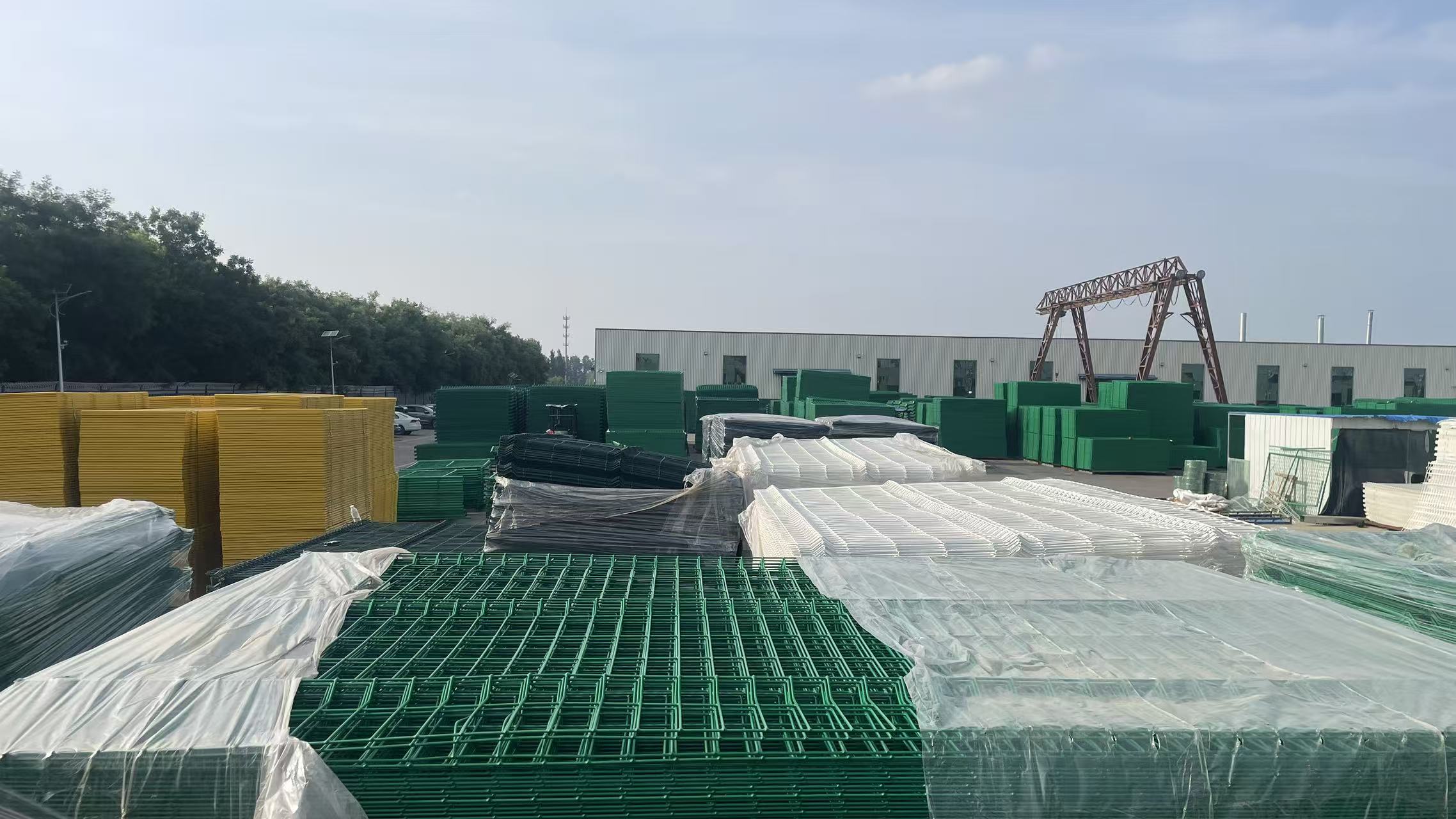
Step 6 - Qualify the production and inspection process. Ask how the panels are welded, how they are checked during production, and what happens before shipment. Dengfeng applies manual inspection during production and 100% full inspection before shipment, operates a 70,000 m2 facility with 80 employees and a 10-engineer R&D team, and produces 5,000,000 m2 of wire mesh products annually.
Step 7 - Confirm commercial and lifecycle terms. Check the minimum order quantity (listed as 1 set for Dengfeng welded mesh fence), the lead time of 15-30 days, the monthly capacity of 420,000 m2, and what support comes after delivery: free CAD drawing, remote technical support and on-site installation guidance. Panel installation should follow the supplier's written guidance, and post spacing, foundation depth, lifting practice and working-at-height rules should follow the site's own safety requirements and local regulations.
Use Cases: Where Each Type Earns Its Place
Welded mesh fence for schools. Schools need a perimeter that keeps sightlines open for staff supervision while making climbing unattractive. Rigid frame panels with a tight aperture, in a height that discourages casual attempts, are the usual answer, and the anti-climb panel formats in Dengfeng's range are built for this pattern.
Welded mesh fence for parks. Parks trade security against appearance. Powder coated welded mesh fence panels in 3D curved or double wire designs keep the boundary legible without turning the park into a compound, and the coating system supports the low-maintenance requirement that municipal budgets depend on.
Welded mesh fence for industrial perimeter. Industrial sites need a boundary that resists deliberate intrusion and survives weather and vehicle-adjacent conditions. The 358 anti-climb panel format, with its 76.2 x 12.7 mm aperture, is the high-security option in this group, and it can be combined with barbed or razor wire where the assessment calls for it.
Welded mesh fence for railways. Third-party application analysis notes that welded mesh fences are preferred for critical infrastructure such as railways, largely because of cable theft prevention, and the rigid panel construction supports that use. Rail corridors that also need camera surveillance benefit from the transparency of a mesh panel.
Welded mesh fence for sports fields. Sports fields need containment as much as exclusion. A rigid panel keeps balls inside the playing area, maintains visibility for spectators and officials, and does not sag between posts the way a tensioned flexible mesh can.
Welded mesh fence for residential properties. Residential and community boundaries usually need a boundary that defines ownership and resists casual intrusion without blocking the street view. Welded mesh panels, and palisade where visible deterrence matters more, are the two practical options; chain link is the lower-cost alternative where the assessed risk is low.
Multi-site and staged programmes benefit from supplier consistency as much as from product choice. Dengfeng's case record for welded mesh fence covers engineering contractors, real estate developers and security wholesalers in Germany, Australia and the United Kingdom, with 5,000 sq.m supplied for site boundary isolation and community security enclosure, a 10-year duration, and results recorded as long-term anti-rust and anti-climb protection. The recorded highlights are full custom size, ISO certification, low maintenance and fast delivery.
Side-by-Side Comparison
Table 1 compares the three fence types on the criteria that decide evaluation outcomes. It describes construction logic rather than quoting figures for products whose published specifications are not part of this comparison.
| Evaluation criterion | Welded mesh fence | Chain link fence | Palisade fence |
|---|---|---|---|
| Structural form | Rigid welded wire panel on posts (3D curved, 358 anti-climb, double wire designs) | Woven diamond mesh supplied in rolls and tensioned between posts | Vertical steel pales fixed to horizontal rails |
| Transparency and camera line of sight | High - uniform rectangular aperture keeps the perimeter readable | High - open diamond weave | Low - closely spaced pales obscure the view at eye level |
| Rigidity and resistance to panel flex | High - the panel is welded and framed, so it does not deform between posts | Flexible - mesh absorbs impact by deforming and depends on tension | High - solid pales and rails form a stiff structure |
| Climb resistance logic | Tight aperture plus rigid frame removes handholds (76.2 x 12.7 mm for 358-style anti-climb panels) | Depends on height and on added toppings such as barbed or razor wire | Pales offer few footholds; performance at the top depends on rail and topping design |
| Design flexibility | Panel type, height, colour and curve can all be varied | Limited to mesh aperture, wire gauge, height and coating colour | Limited to pale profile, spacing, height and finish |
| Post and foundation demand | Moderate - rigid panels carry load through the frame | Lower panel weight, but frequent posts and ongoing tensioning | Higher - heavier steel increases post and foundation demand |
| Maintenance exposure | Low when hot-dipped galvanizing is combined with powder coating (service life rated over 10 years) | Coating damage and tension loss are the main triggers | Coated pales can be touched up; corrosion is more visible on a solid surface |
| Typical best fit | Schools, sports fields, industrial perimeters, railways, municipal sites where visibility and anti-climb both matter | Long boundaries, demarcation and low-threat sites | Sites where visible deterrence matters more than line of sight |
Table 2 lists the published values for Dengfeng's welded mesh fence and the supply terms that sit behind it. These are the numbers a buyer can put in a specification document and verify.
| Parameter | Published value |
|---|---|
| Material | Low carbon steel wire, galvanized steel pipe |
| Surface treatment | Hot dipped galvanized followed by powder coating |
| Height range | 630 mm - 3000 mm |
| Width range | 2000 mm - 3000 mm |
| Wire diameter | 3.0 mm - 6.0 mm |
| Mesh size | 50 x 100 mm; 76.2 x 12.7 mm |
| Panel types | 3D curved fence, 358 anti-climb fence, double wire fence, palisade fence, temporary construction fence, chain link fence |
| Models | 3D-2000, 358-1800, TW-1500, TC-2100 |
| Service life | Over 10 years |
| Certificates | ISO 9001, SGS, BV |
| Customization | Size, wire diameter, mesh, colour, logo, surface treatment (OEM / ODM) |
| Quality control | 100% full inspection |
| Minimum order quantity | 1 set |
| Lead time | 15 - 30 days |
| Monthly capacity | 420,000 m2 |
| After-sales | Remote technical support, on-site installation guidance, free CAD drawing |
When the priority is stated first, the comparison becomes shorter:
- Anti-climb resistance with full visibility: welded mesh fence with a rigid frame and a tight aperture, such as the 358 anti-climb panel format.
- Visible deterrence and a clearly defined physical boundary: palisade fence, accepting reduced line of sight.
- Maximum coverage length at low material intensity: chain link fence, on sites with a low assessed threat.
- Design integration across a campus or municipal scheme: powder coated welded mesh fence panels in 3D curved or double wire designs.
- Long-term, low-maintenance perimeter: welded mesh panels with hot-dipped galvanizing plus powder coating, the combination behind the over-10-year service life rating.
Frequently Asked Questions
Which standards should welded mesh fence panels meet for schools, parks and industrial perimeters?
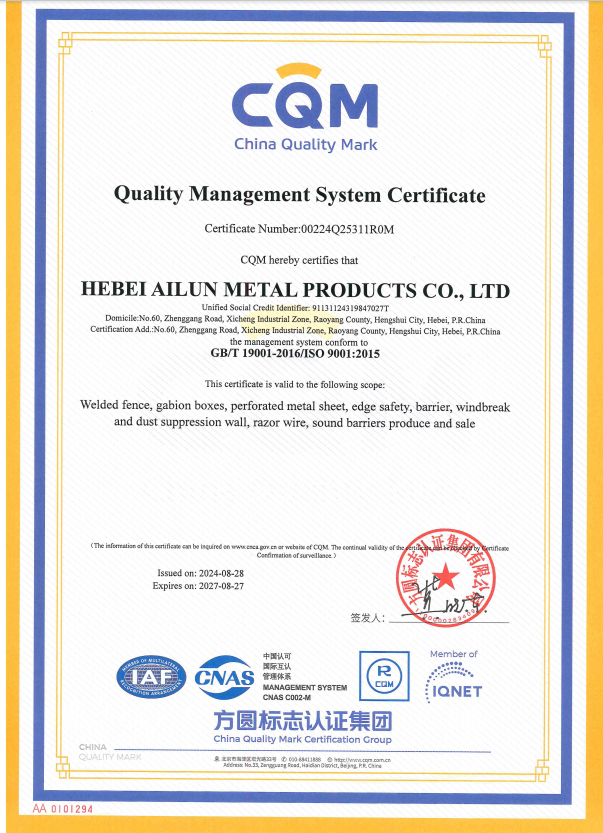
Two published standards are commonly referenced in tenders. EN 10223-7:2012 is the European standard specifying requirements for steel wire welded panels for fencing in schools, parks and industrial sites. ASTM F2453 / F2453M-14 is the US standard specification for welded wire mesh fence fabric with metallic or polymer coatings used in high-security applications. On the supplier side, Dengfeng holds ISO 9001:2015 Quality Management System certification issued by CQM under certificate number 00224Q25311R0M, valid from 28 August 2024 to 27 August 2027, covering the production and sale of welded fence, gabion boxes, perforated metal sheet, edge safety barrier, windbreak and dust suppression wall, razor wire and sound barriers. Local building code compliance and any client-specific anti-intrusion requirement must be checked separately, because the panel standard and the site code are different documents.
Can welded mesh fence panels be customized for anti-climb and anti-cut performance?
Yes. Dengfeng operates an OEM / ODM production model with customization of size, wire diameter, mesh, colour, logo and surface treatment. The published welded mesh fence range covers 3D curved, 358 anti-climb and double wire panel designs under the models 3D-2000, 358-1800, TW-1500 and TC-2100. Heights run from 630 mm to 3000 mm, widths from 2000 mm to 3000 mm, and wire diameter from 3.0 mm to 6.0 mm, with mesh sizes of 50 x 100 mm and 76.2 x 12.7 mm. The tighter 76.2 x 12.7 mm aperture is the format used for 358-style anti-climb panels, and wire diameter controls how long a cutting attempt takes. Monthly capacity is 420,000 m2, so customized panel sizes and finishes can be produced within the same specification framework as standard panels.
What drives the cost difference between welded mesh fence, chain link fence and palisade fence?
Cost differences come from four variables rather than from the category name. First, steel mass: wire diameter (3.0-6.0 mm on Dengfeng welded mesh panels), aperture, and whether the panel needs a rigid frame all change how much steel sits in each square meter. Second, the coating system: hot-dipped galvanizing followed by powder coating is a two-layer corrosion protection system and is the basis of the over-10-year service life rating on Dengfeng welded mesh fence panels, whereas a single-coat product is usually cheaper at purchase and more expensive to own. Third, post and foundation demand: heavier products such as palisade pales place more load on posts and bases. Fourth, customization: non-standard heights, custom colours and logo marking add production steps. Buyers should also normalize the quote unit before comparing, because chain link is normally sold by roll while welded mesh fence is sold by panel.
Can a buyer validate welded mesh fence panels with a sample before a bulk order?
Yes. Dengfeng's minimum order quantity is listed as 1 set, which allows a first panel or a small trial order before a full project order. Free CAD drawings are provided so panel dimensions, post positions and gate openings can be checked against the site drawing before production starts. Quality control is 100% full inspection, and the certificate set covers ISO 9001, SGS and BV. Buyers evaluating a school, park or industrial perimeter can request the relevant certification documents and inspection records as part of the sample review.
What is the typical lead time for welded mesh fence panels, and what extends it?
Standard lead time is 15-30 days, supported by a monthly capacity of 420,000 m2. The factors that most often extend a schedule are customized surface treatment and colour, non-standard panel dimensions, logo marking, and order volume that exceeds the current production slot. Approval of the CAD drawing, and any design change made after approval, also shift the start of production, so buyers planning multi-site or staged deliveries should confirm the drawing before the order is placed rather than during production. To move from comparison to specification, send the perimeter length, required height and the threat profile of the site to request a sample panel, a quotation or the full welded mesh fence catalogue - email sales@alunfence.com or message +86 158-3395-6854 on WhatsApp.
Conclusion: Decide by Function, Then Verify the Supplier
The three fence types are not interchangeable, and the comparison should end with a functional decision rather than a price decision. Welded mesh fence panels win where a perimeter must stay visible while resisting climbing and cutting - the rigid frame, the 50 x 100 mm and 76.2 x 12.7 mm apertures, and the low carbon steel wire with hot-dipped galvanizing plus powder coating are what make that combination hold up across a service life rated at more than 10 years. Chain link fence stays relevant for long, low-threat boundaries. Palisade fence answers sites where visible deterrence outweighs line of sight.
Whichever direction the evaluation points, the specification is only as strong as the manufacturer behind it. Dengfeng was founded in 2008, operates a 70,000 m2 facility in Anping County with 80 employees and a 10-engineer R&D team, produces 5,000,000 m2 of wire mesh products annually, and exports 80% of its output to Europe, Saudi Arabia, the Middle East, the United Arab Emirates and the United States.
The next step is a documented one: confirm the standard, confirm the material and coating system, confirm the dimensions against the site survey, and confirm the supplier's inspection record before production begins.
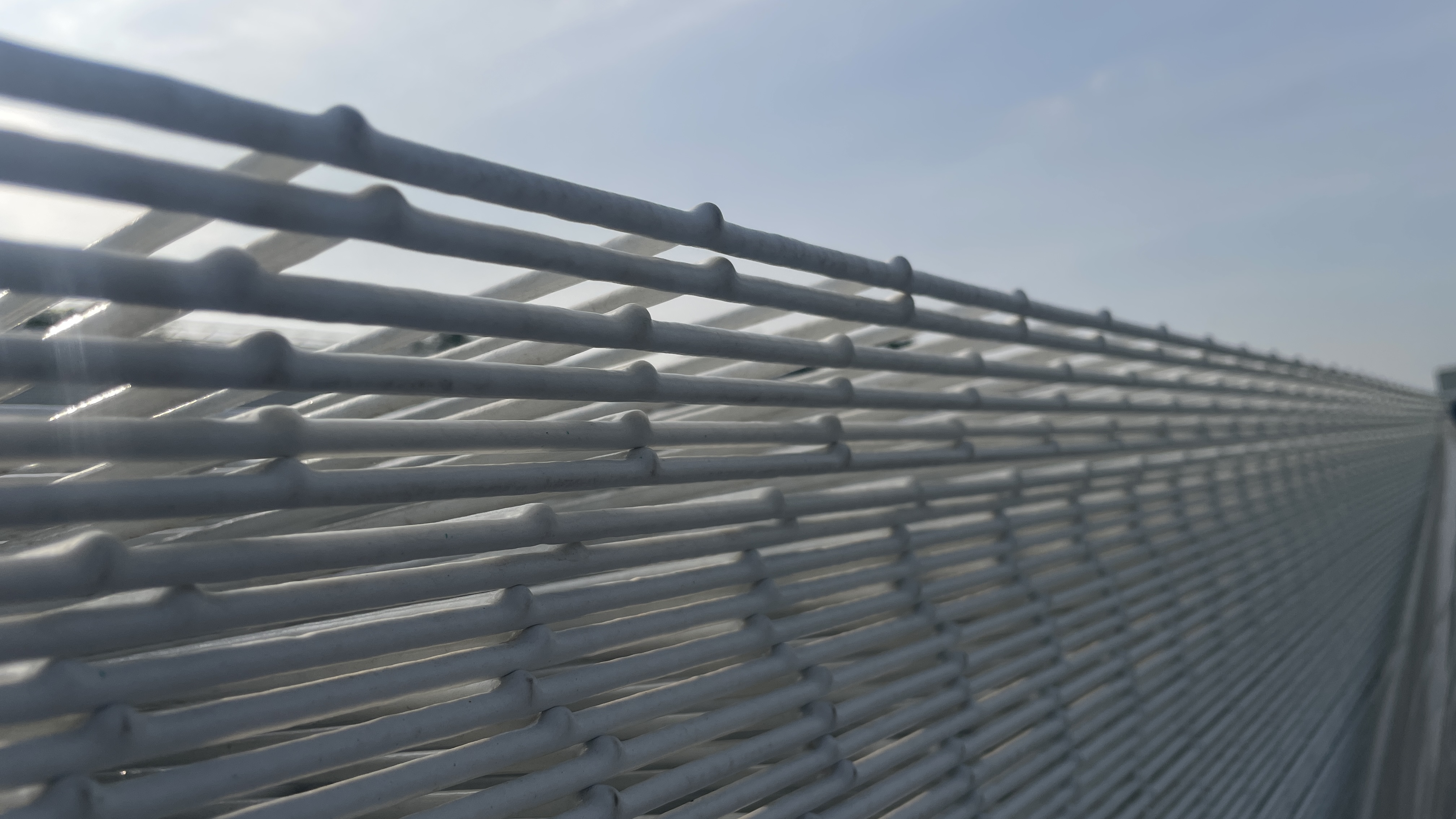
Next step: put the specification on paper
Request a sample panel, a project quotation or the full product catalogue from Anping Dengfeng Wire Mesh Products Co., Ltd. Download the brochure: Welded Wire Mesh and GI Wire Catalogue (PDF).
Website: dengfengwiremesh.com
Email: sales@alunfence.com
Tel / WhatsApp: +86 158-3395-6854
Contact: Ren Lijuan
Send the perimeter length, required height, threat profile and target installation date, and the team will return a panel drawing, a specification sheet and a quotation.
Have Questions or Need More Details?
Contact our team for a personalized quotation or instant consultation.
Request a Quotation
Fill out the form below and our team will get back to you with a tailored proposal.
WhatsApp Direct Chat
Prefer to chat in real-time? Message us on WhatsApp for instant assistance & quick answers.
- Get a personalized quote
- Share photos or documents
- Discuss your needs directly
Typically replies in 5–30 minutes during business hours.