
Solved: Long Service Life & Low Maintenance for Welded Mesh Fence in Outdoor Perimeter Security
Outdoor Perimeter Security · Problem–Solution Guide
Solved: Long Service Life & Low Maintenance for Welded Mesh Fence in Outdoor Perimeter Security
The short answer: outdoor perimeter fencing fails for three predictable reasons — corrosion that starts at weld intersections and cut wire ends, panels that are easy to climb, and maintenance cycles that never really end. Welded mesh fence addresses all three at the specification stage: low carbon steel wire and galvanized steel pipe form the structure, hot-dipped galvanizing followed by powder coating forms the corrosion barrier, and rigid anti-climb panel designs remove the footholds. The service life stated for this construction is over 10 years, and deployments with engineering contractors, real estate developers and security wholesalers in Germany, the United Kingdom and Australia recorded a 10-year result of long-term anti-rust and anti-climb protection with low maintenance.
This guide is written for buyers in the evaluation stage — procurement managers, contractors, developers, and facility or security managers — who are tired of replacing, repainting or re-securing the same fence line. It separates the problem from the fix, ranks the decisions that actually control lifespan, and lists the verified specifications you can copy directly into a tender document.
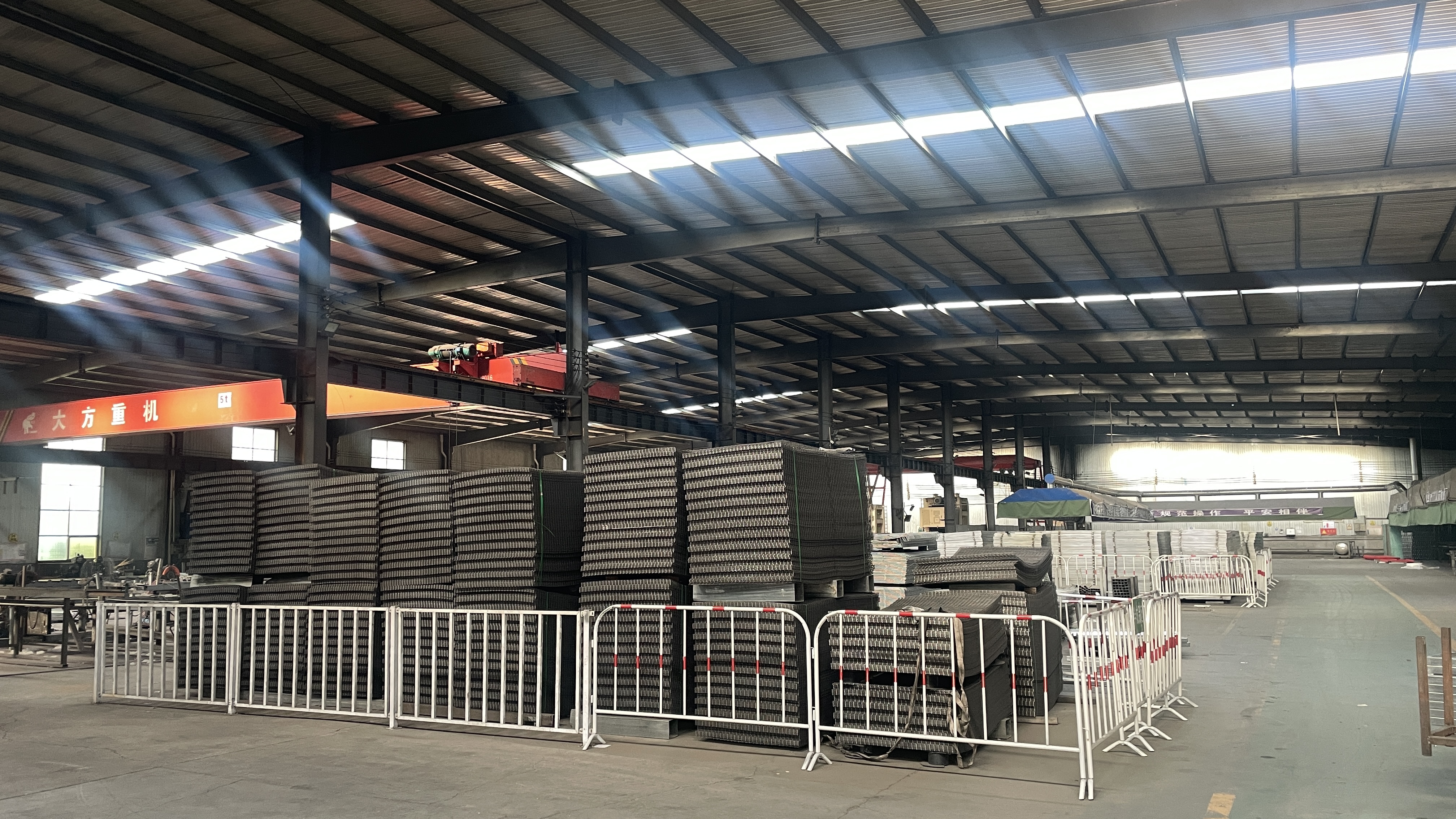
The failure pattern: rust, climb risk and endless upkeep
Corrosion rarely spreads evenly across a fence. It starts where the protective layer is thinnest and where water sits: at the welded intersections of the mesh, at the cut ends of horizontal wires, and at the post base where soil, splash and dew keep the metal wet for longer. Once surface rust opens those points, each wet–dry cycle carries it further along the wire and under the coating. Coastal air carrying salt and industrial atmospheres carrying airborne chemical loading accelerate the same process.
Climbing risk follows a different logic, and it is often designed in by accident. Meshes with regular horizontal wires, flexible frames or oversized openings give hands and feet purchase, and a panel that flexes under body weight makes the attempt easier rather than harder. That is why welded mesh fence as a category is not automatically the answer to an intruder problem — the panel geometry has to be chosen for it.
Upkeep is the third and most expensive failure. Repainting a rusted line, replacing panels after a breach attempt, straightening frames after vehicle contact, or clearing vegetation from a deformed run — none of these appear as a single line item at purchase, but all of them appear in the operating budget afterwards. The practical difference between two fences that look identical on day one is how many of those interventions they need between year two and year ten.
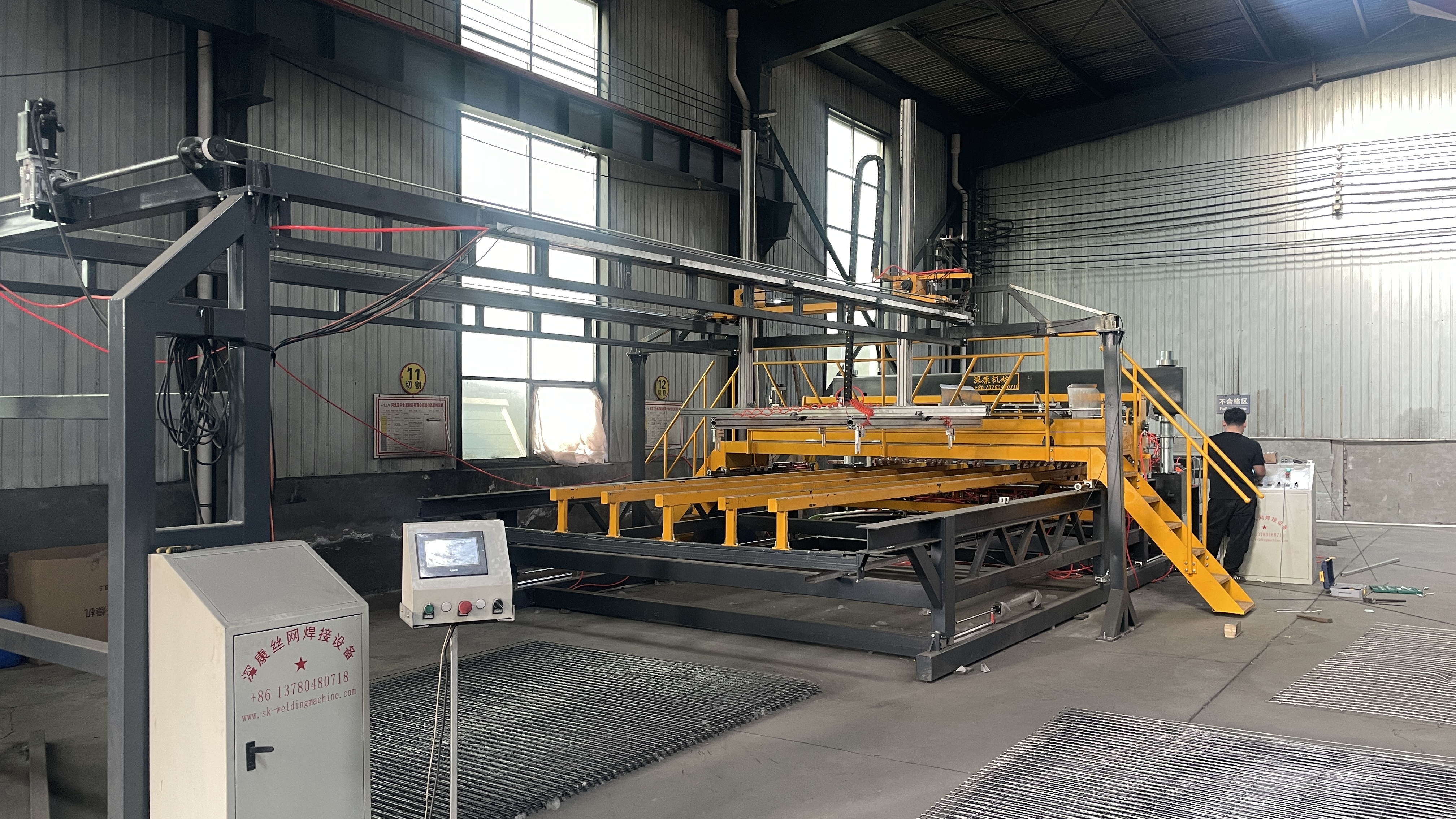
Buyer’s rule of thumb: the cheapest moment to solve corrosion, climbing and maintenance is at specification. All three are decided by a document, not by a later site repair.
What the market and the standards indicate
Welded mesh is a mainstream construction product rather than a specialty item. The global welded wire mesh fence market was valued at USD 7.04 billion in 2025 and is projected to reach USD 11.72 billion by 2034 (Dataintelo). Within the wider fencing market — estimated at USD 33.8 billion in 2025 by Grand View Research — metal fencing holds the largest material segment share at 53%. Asia Pacific held a 38.5% revenue share of the welded wire mesh fence market in 2025, driven largely by infrastructure projects in China and India (Dataintelo).
Two standards set the technical reference points for outdoor panels in the main export markets. EN 10223-7:2012 is the active European standard specifying requirements for steel wire welded panels for fencing in schools, parks and industrial sites. ASTM F2453 / F2453M-14, published by ASTM International, covers the standard specification for welded wire mesh fence fabric with metallic or polymer coatings for high-security applications.
Supply is competitive and moving toward integrated perimeter systems: key global players in the security fencing market include Betafence, Bekaert, Ameristar Perimeter Security and Jacksons Fencing, and Betafence expanded its perimeter security portfolio in February 2024 with new-generation welded mesh systems combining intrusion detection and solar surveillance. Industry practice also explains why the category keeps winning critical sites — welded mesh is preferred for infrastructure such as railways, where cable theft prevention matters, and for schools, because rigid frame panels and anti-climb characteristics reduce opportunity.
For a buyer in the evaluation stage, that context points in one direction only: market growth and standards define the category, but panel quality and coating quality are what remain after the statistics are forgotten.
The engineered fix: material, coating and panel rigidity
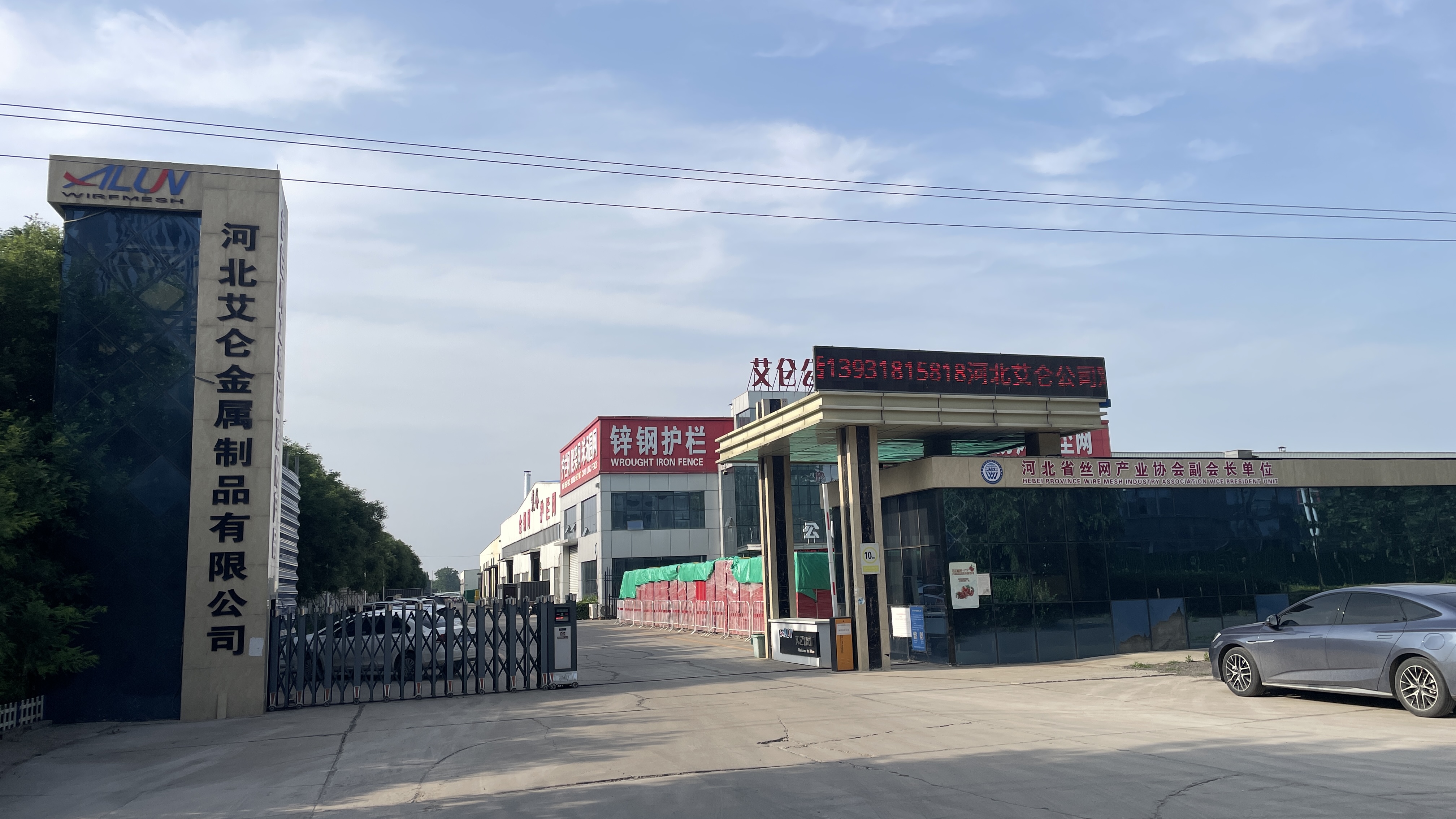
Anping Dengfeng Wire Mesh Products Co., Ltd. is a wire mesh manufacturer based in Anping County, Hebei Province, China — the district known as the “Hometown of Wire Mesh” — producing welded wire mesh, welded wire mesh panels, 358 security fences, BRC / roll-top fences, double-wire panels, chain link fences, temporary fences, barbed and razor wire, and gabion baskets. Founded in 2008, the company operates a 70,000 m² factory with 80 employees, a 10-engineer R&D team and an annual output of 5,000,000 m², exporting about 80% of production to Europe, Saudi Arabia, the Middle East, the United Arab Emirates and the United States.
A two-layer corrosion barrier instead of a single finish
The welded mesh fence is made of low carbon steel wire and galvanized steel pipe, and the surface treatment is hot-dipped galvanizing followed by powder coating. The two layers do two different jobs: galvanizing provides sacrificial protection to the steel — including at welds and cut ends where rust normally starts — while the powder coating seals the surface and holds a consistent colour that does not need repainting to stay uniform.
This is the specification that answers the coastal and industrial corrosion question. A panel finished with a single paint-type coating relies on one barrier; once it is scratched through, corrosion begins underneath. A hot-dipped galvanized then powder coated panel carries a second line of defence below the visible surface, which is why the surface treatment — not the colour — should be the first item checked in a quotation.
Anti-climb geometry selected from the actual panel range
Anti-climb performance is a panel-design decision, not an add-on. Dengfeng’s welded mesh fence range covers 3D curved fence, 358 anti-climb fence, double wire fence, palisade fence, temporary construction fence and chain link fence, with the 358 anti-climb fence as the type developed specifically against climbing. Rigid frame panels are the reason welded mesh, rather than flexible netting, is specified where climbing and cut-through are realistic risks.
A stated service life measured in years, not seasons
The product data for this construction states a service life of over 10 years. That figure is not theoretical. A 5,000 m² deployment with engineering contractors, real estate developers and security wholesalers in Germany, Australia and the United Kingdom ran for a duration of 10 years, solving site boundary isolation and community security enclosure with long-term anti-rust and anti-climb protection. The recorded project highlights were full custom sizing, ISO certification, low maintenance and fast delivery.
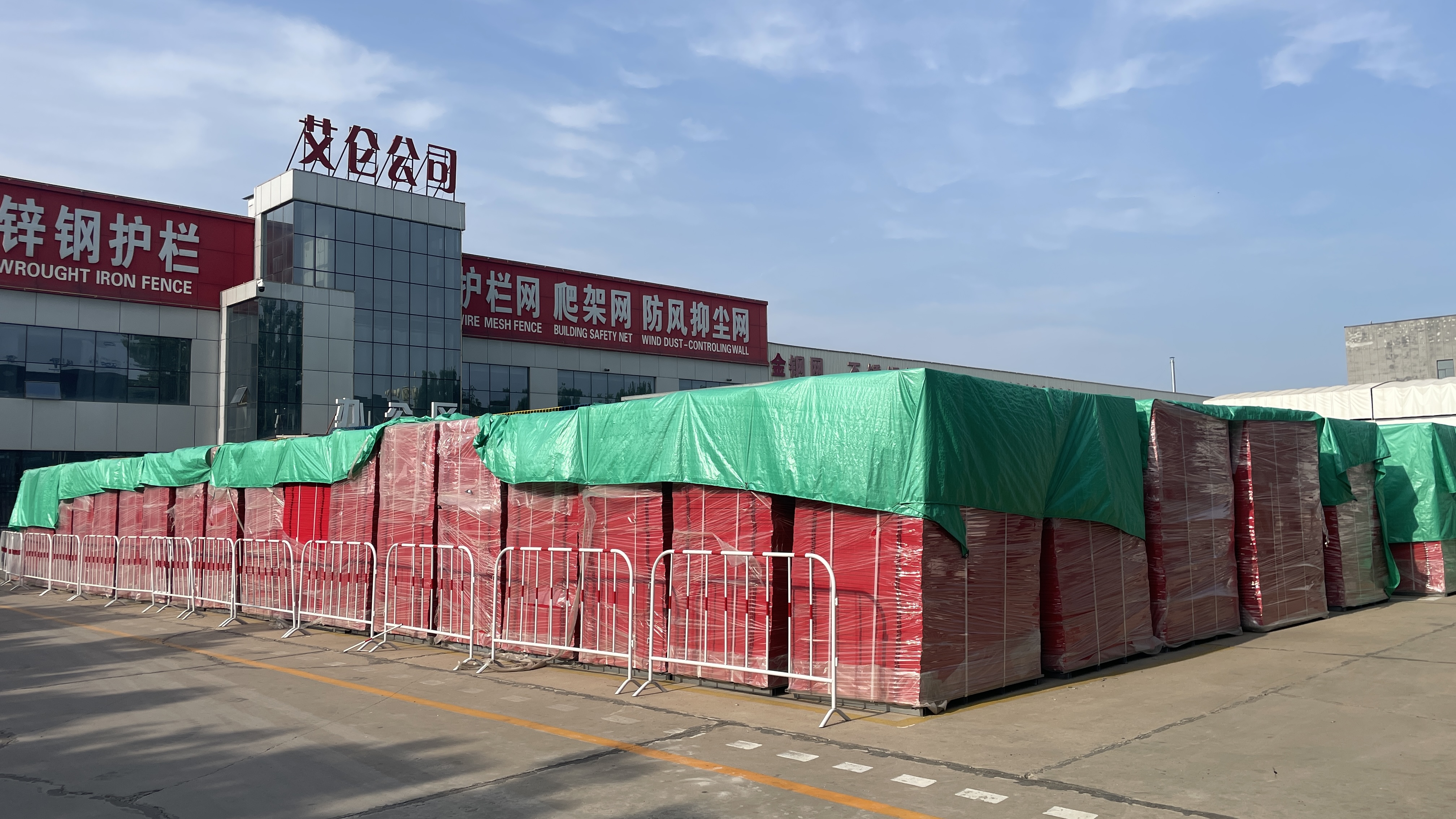
Ranked: the five decisions that decide whether the fence survives ten years
The list below is ranked by how much each decision affects the number of maintenance interventions a perimeter needs after year one. Get the first two right and the rest supports them; get them wrong and no amount of installation quality compensates.
- Corrosion system matched to the exposure class. Hot-dipped galvanizing followed by powder coating is the base specification for coastal, industrial and high-humidity outdoor sites. The decision is not the colour; it is whether galvanizing sits underneath the powder coating.
- Panel type matched to real climb risk. Use a 358 anti-climb panel where climbing is a credible threat, and 3D curved or double wire panels where the priority is a rigid, visually defined boundary. Rigid frame panels are the mechanism that makes welded mesh the preferred choice for high-security outdoor sites.
- Dimensions matched to the site rather than a catalogue default. The welded mesh fence range spans height 630 mm–3000 mm and width 2000 mm–3000 mm, with wire diameter 3.0 mm–6.0 mm and mesh openings of 50×100 mm or 76.2×12.7 mm. Custom sizing is available, and correct sizing reduces both wind loading problems and follow-up straightening work.
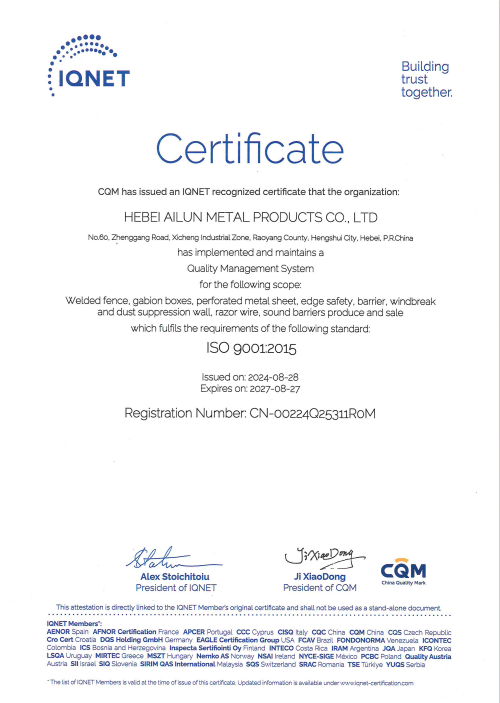
- Quality control and certification you can file. Dengfeng holds ISO 9001:2015 Quality Management System certificate 00224Q25311R0M issued by CQM, valid from 28 August 2024 to 27 August 2027 under GB/T 19001-2016 / ISO 9001:2015, with a scope covering welded fence and related products; the welded mesh fence range is also listed with ISO 9001, SGS and BV. Every order passes 100% full inspection before shipment.
- Installation support and delivery planning. After-sales support includes free CAD drawing, remote technical support and on-site installation guidance. Monthly capacity is 420,000 m² with a 15–30 day lead time, which keeps multi-site programmes on schedule without storing surplus stock.
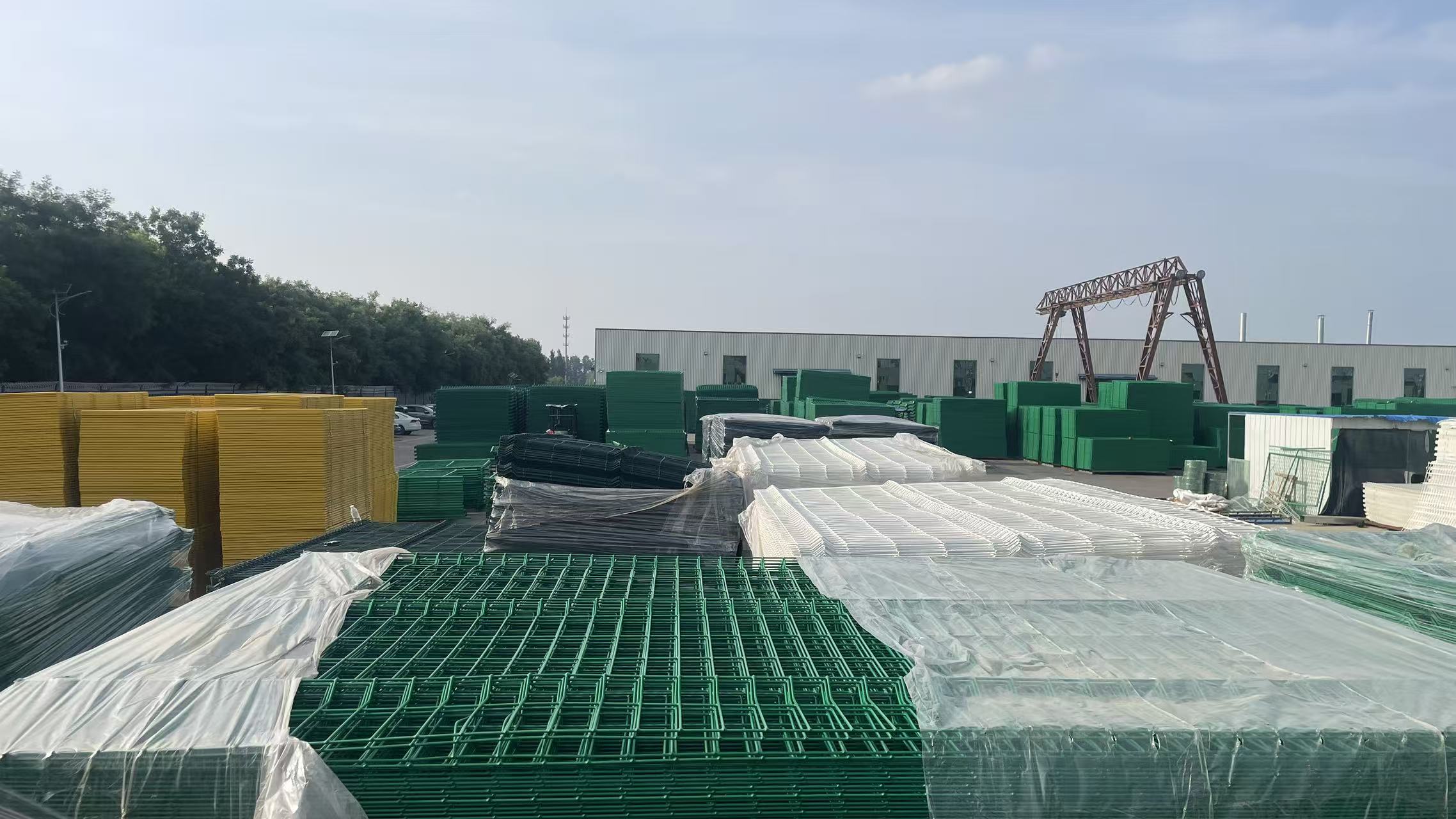
Where welded mesh fence performs outdoors
Because the failure modes above repeat across site types, the same construction is applied to very different outdoor environments. The applicable industries for this product family are construction, municipal engineering, real estate, airport, port, school, farm, transportation and security protection.
- Coastal and industrial perimeters. Salt-laden air and airborne industrial loading are the fastest corrosion environments, which is where the galvanized-plus-powder-coated specification earns its place. Fences that would otherwise be repainted within a few seasons are specified here as a single installation.
- Welded mesh fence for schools. Rigid frame panels and anti-climb characteristics reduce opportunity for climbing, and welded mesh is preferred for schools for exactly this reason.
- Welded mesh fence for railways. Rail corridors are a documented use case where welded mesh is preferred for its anti-climb and rigid panel characteristics, supporting cable theft prevention along the perimeter.
- Welded mesh fence for industrial perimeter. Large factory and logistics boundaries need long runs with few maintenance points, which favours a panel with a stated service life of over 10 years and low maintenance.
- Welded mesh fence for parks and welded mesh fence for sports fields. Here the requirement is a defined, damage-resistant boundary that stays visually consistent without frequent repainting.
- Welded mesh fence for residential properties. The documented case in Germany, Australia and the United Kingdom applied welded mesh fence to community security enclosure and site boundary isolation — residential-scale boundaries where low maintenance matters to the owner, not just to the contractor.
Panel type, height, wire diameter and mesh opening change between these scenarios; the corrosion system and the requirement for rigid panels do not.
Verified specification and compliance reference
The table below lists the verified parameters for the Dengfeng welded mesh fence range and what each parameter means for maintenance and service life.
| Verified parameter | Value | Effect on service life and maintenance |
|---|---|---|
| Material | Low carbon steel wire, galvanized steel pipe | Provides the structural base for rigid panels and posts |
| Surface treatment | Hot-dipped galvanized + powder coated | Two-layer corrosion barrier; the decisive anti-rust specification |
| Height range | 630 mm – 3000 mm | Allows the panel height to match the climb risk of the site |
| Width range | 2000 mm – 3000 mm | Reduces post count and the number of joints that can corrode |
| Wire diameter | 3.0 mm – 6.0 mm | Heavier wire resists deformation and cut attempts |
| Mesh size | 50×100 mm, 76.2×12.7 mm | Smaller openings reduce hand and foot purchase |
| Service life | Over 10 years | Sets the replacement interval used in whole-life costing |
| Certification | ISO 9001, SGS, BV | Documentation that can be attached to a tender submission |
| Quality control | 100% full inspection | Coatings and dimensions are checked before shipment, not on site |
| Reference | Region | What it covers |
|---|---|---|
| EN 10223-7:2012 | EU | Steel wire welded panels for fencing in schools, parks and industrial sites |
| ASTM F2453 / F2453M-14 | USA | Welded wire mesh fence fabric with metallic or polymer coatings for high-security applications |
| ISO 9001:2015 — certificate 00224Q25311R0M (CQM) | Global | Quality management system, valid 28 August 2024 to 27 August 2027; GB/T 19001-2016 / ISO 9001:2015 |
Frequently asked questions
Does welded mesh fence meet EU, UK and US fencing standards?
Yes for the relevant product standards, provided the scope of each document is checked against the application. EN 10223-7:2012 is the active European standard specifying requirements for steel wire welded panels for fencing in schools, parks and industrial sites, and ASTM F2453 / F2453M-14 is the US standard specification for welded wire mesh fence fabric with metallic or polymer coatings for high-security applications. On the manufacturing side, Anping Dengfeng Wire Mesh Products Co., Ltd. holds ISO 9001:2015 certificate 00224Q25311R0M issued by CQM, valid from 28 August 2024 to 27 August 2027 under GB/T 19001-2016 / ISO 9001:2015, and lists ISO 9001, SGS and BV for the welded mesh fence range.
How do the anti-rust and anti-climb properties hold up over ten years outdoors?
Through construction rather than maintenance. The panel uses low carbon steel wire and galvanized steel pipe, with hot-dipped galvanizing followed by powder coating as the corrosion system, and a rigid anti-climb panel design selected from the 3D curved, 358 anti-climb and double wire types. The stated service life for this construction is over 10 years, and a 5,000 m² deployment with engineering contractors, real estate developers and security wholesalers in Germany, Australia and the United Kingdom delivered a 10-year result of long-term anti-rust and anti-climb protection for site boundary isolation and community security enclosure.
What drives the total cost of a low-maintenance welded mesh fence perimeter?
Three factors dominate: the corrosion system, the panel type and the accuracy of the sizing. Two panels can look identical on the day of installation and still differ in whether the fence is repainted or replaced later. The variables that change a quotation are panel type (3D curved, 358 anti-climb, double wire, palisade, temporary construction or chain link), height (630–3000 mm), width (2000–3000 mm), wire diameter (3.0–6.0 mm), mesh opening (50×100 mm or 76.2×12.7 mm), colour and logo customisation, and order quantity. Because a stated service life of over 10 years with low maintenance removes repeat spending, the meaningful comparison is the whole-life cost of the run rather than the unit price of the panel.
Can panels be validated before a full order is placed?
Yes, and the validation starts before production. Dengfeng supplies free CAD drawings and customises size, wire diameter, mesh, colour, logo and surface treatment. At the drawing and sample stage, check the mesh opening against specification (50×100 mm or 76.2×12.7 mm), the wire diameter (3.0–6.0 mm), the panel height and width, and confirm that the surface treatment is hot-dipped galvanizing followed by powder coating rather than a single finish. The minimum order quantity is 1 set, so a first validation order can be kept small.
What is the minimum order quantity and lead time?
The minimum order quantity is 1 set, monthly production capacity is 420,000 m², and the standard lead time is 15–30 days depending on panel type, customisation and quantity. To move from evaluation to a firm delivery date, send your panel type, height and width, wire diameter, mesh opening, colour and destination port by email to sales@alunfence.com or WhatsApp +86 158-3395-6854, and a production slot can be confirmed against your schedule.
Conclusion: specify the barrier, not the repair
Rust, climbing and upkeep are not maintenance problems — they are specification problems that surface later. A welded mesh fence built from low carbon steel wire and galvanized steel pipe, finished with hot-dipped galvanizing followed by powder coating, and supplied as rigid anti-climb panels, removes all three at the point where they are still cheap to solve. The verified service life of over 10 years, and the 10-year result recorded with engineering contractors, real estate developers and security wholesalers in Germany, the United Kingdom and Australia, are the evidence buyers need when a fence has to stay in service instead of appearing in next year’s repair budget.
Next step: sample, specification and quotation
Send your site conditions — exposure (coastal, industrial, urban), required panel type, height and width, wire diameter and mesh opening — and Dengfeng will return a quotation, a free CAD drawing and sample arrangements for validation. Minimum order quantity is 1 set, monthly capacity is 420,000 m², and lead time is 15–30 days.
Email: sales@alunfence.com | WhatsApp / Tel: +86 158-3395-6854 | Website: dengfengwiremesh.com | Blog: blog.dengfengwiremesh.com
Download the full product catalogue and wire mesh brochure (PDF): Welded wire mesh and GI wire brochure
Have Questions or Need More Details?
Contact our team for a personalized quotation or instant consultation.
Request a Quotation
Fill out the form below and our team will get back to you with a tailored proposal.
WhatsApp Direct Chat
Prefer to chat in real-time? Message us on WhatsApp for instant assistance & quick answers.
- Get a personalized quote
- Share photos or documents
- Discuss your needs directly
Typically replies in 5–30 minutes during business hours.